
A lot of Crown Point homeowners ask the same question after the first hot stretch of summer. They step outside for dinner on the patio, the kids want to stay in the yard a little longer, and within minutes everyone is swatting, scratching, and heading back inside. The yard looks fine. The lawn is cut. There isn’t an obvious swamp in sight. But the mosquitoes are still there.
That’s the frustrating part about mosquito control in Northwest Indiana. What works for a quick evening on a dry patio in another region often falls apart here. Humidity hangs in the air, rainwater lingers, shaded beds stay damp, and our local breeding pressure keeps replenishing the problem. Homeowners end up trying candles, sprays, granules, traps, and gadgets from the hardware store, only to find that the relief is partial, short-lived, or both.
So what is the best mosquito repellent for yards?
The honest answer depends on what you mean by “best.” If you want personal skin protection for a few hours, one product category stands out. If you want to protect a seating area without coating the whole yard, there’s a different answer. If you want reliable yard-wide reduction that lasts through our summer pattern in Crown Point and nearby Northwest Indiana communities, the answer usually moves away from retail DIY and toward a professional treatment plan built for local conditions.
Reclaim Your Crown Point Yard from Mosquitoes
On paper, a Northwest Indiana summer evening should be simple. The grill is on, the dog is out, somebody is watering flower beds, and the patio should be the best room of the house. Then the mosquitoes show up around dusk and change the whole mood.
Most families don’t call about one mosquito. They call when the yard starts controlling them. Kids won’t stay outside. Guests bunch up near the back door. People skip the fire pit because nobody wants to be the one getting bitten through a T-shirt. By that point, they’ve usually already tried something off the shelf.
Why this question gets confusing fast
The market is crowded with products that sound similar but do very different jobs. A personal repellent for exposed skin is not the same thing as a barrier treatment for foliage. A patio device is not the same thing as a larval control product for standing water. A fogger may give a quick knockdown and then disappear, while another treatment is designed to stay active much longer.
That’s where homeowners get mixed messages. A product can be “good” at one task and still be the wrong choice for your yard.
Practical rule: Match the tool to the problem. Personal repellents protect people. Yard treatments reduce mosquito pressure on the property. Standing-water products interrupt breeding. No single gadget does all three well.
In Crown Point, that distinction matters because local mosquito pressure isn’t just coming from one flowerpot or one wet corner. It often comes from a combination of resting sites, hidden moisture, neighboring conditions, and repeated hatch cycles after rain.
The local question that matters
When someone asks what is the best mosquito repellent for yards, the better question is this: what will still work after humidity, rainfall, and heavy evening activity start stacking up?
That’s the standard a solution has to meet in Northwest Indiana. It has to fit real backyard use, not just packaging claims. It also has to be applied with some thought for kids, pets, pollinators, and the way mosquitoes move through a property.
Why Northwest Indiana Yards Are Mosquito Magnets
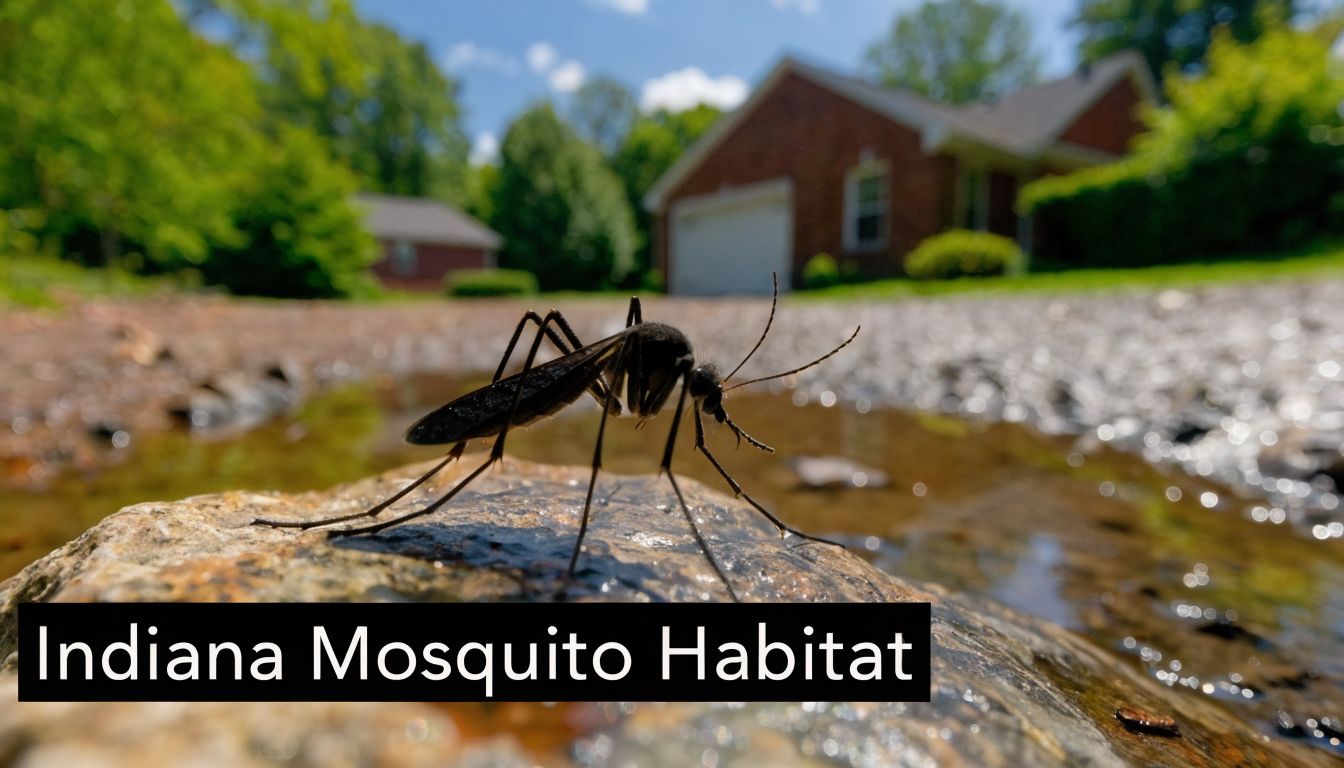
By mid-July in Crown Point, I can walk a yard that looks clean, trimmed, and well cared for, and still find the conditions mosquitoes want most. A few shaded beds stay damp after rain. A low spot near the fence holds water longer than the rest of the lawn. The family sees bites around the patio and assumes the problem showed up overnight. In most cases, the yard has been supporting mosquito activity for days.
Humidity and rainfall change the game
Northwest Indiana’s summer humidity keeps foliage dense and air movement low in the exact places mosquitoes rest during the day. Regular storms add another problem. Water collects fast, then lingers in shaded pockets long after the sunny parts of the yard look dry.
That pattern is why generic store advice falls short here. A treatment that sounds good on the label may break down faster, wash off, or miss the protected areas where mosquitoes spend their time. Homeowners who want lower-exposure options often ask about plant-based products, but those need realistic expectations too. Some natural ingredients can help in limited uses, and Jungle Story's neem oil guide gives a helpful overview of one common ingredient, but yard-wide mosquito control still depends on where moisture collects and how the product is used.
Clay soil keeps wet spots active longer
A lot of Northwest Indiana properties sit on clay-heavy soil. That matters more than many homeowners realize. Clay drains slowly, compacts easily, and holds water near the surface after summer rain or irrigation.
In practical terms, one yard can have several mosquito zones at once. The lawn may dry on top while mulch beds, downspout outlets, splash blocks, and low edges near the foundation stay wet underneath. Add a ditch, pond, retention area, or wooded line nearby, and fresh mosquitoes keep moving back into the property. That is one reason big box treatments often feel inconsistent. The product may reduce activity for a short window, but it does not change the local moisture pattern feeding the pressure.
Mosquitoes use the whole yard, not one spot
Homeowners often focus on standing water alone. Breeding water matters, but it is only part of the picture. Mosquitoes also need cool resting cover through the day and easy access to people at dusk.
On most properties, I look at three zones:
- Breeding sites: clogged gutters, toys, plant saucers, birdbaths, tarps, drains, corrugated downspout extensions, and low areas that hold shallow water
- Resting sites: dense shrubs, groundcover, ivy, tall grass edges, damp mulch, under decks, and shaded fence lines
- Biting zones: patios, back doors, play sets, grill areas, and seating areas used in the evening
A yard with all three will keep producing complaints even if the homeowner treats only one corner.
The worst mosquito yard on the block is often the one with the most shade, the most trapped moisture, and the most protected foliage, not the one that looks the least maintained.
Local strategy beats one-size-fits-all products
Northwest Indiana mosquito control works better when the plan matches the property. Drainage, shade, soil, nearby water, and how the family uses the yard all affect what will hold up and what will disappoint. That is also why broad claims on packaging can be misleading in this area. Conditions in Crown Point are different from a dry yard with sandy soil and full sun.
For homeowners comparing lower-toxicity approaches with stronger control methods, this guide to natural mosquito repellent options for Northwest Indiana yards helps explain where gentler products fit and where professional treatment makes more sense. In many local yards, the safest effective approach is not guessing at one product. It is building a property-specific plan that addresses water, resting areas, and repeat reinfestation together.
Comparing DIY Yard Mosquito Repellent Options
A lot of Crown Point homeowners try two or three store-bought mosquito products before they call us. That makes sense. You want relief fast, and the box or label usually makes the job sound simple. In Northwest Indiana, the yard often fights back. Humid evenings, heavy vegetation, and clay soil that holds moisture can make a decent DIY product feel inconsistent within a week.
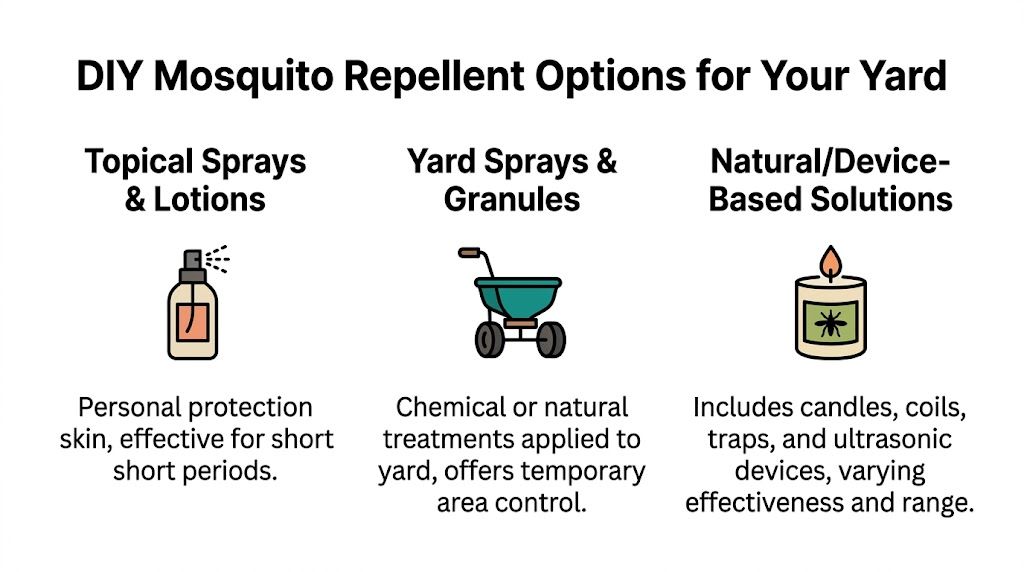
The practical way to compare DIY options is simple. Ask what each product protects, how sensitive it is to weather, and whether it affects mosquitoes across the property or only around one person or one seating area.
Personal sprays and lotions
For direct skin protection, topical repellents are still the most reliable DIY tool. The American Academy of Dermatology advises using EPA-registered repellents with active ingredients such as DEET, picaridin, IR3535, or oil of lemon eucalyptus, because they are proven for preventing bites when used as directed on skin and clothing (AAD insect repellent guidance).
That helps the person wearing it. It does not change mosquito pressure in the yard.
I recommend this approach for soccer practice in the driveway, a quick dog walk, or an evening when the family will be moving around instead of sitting in one fixed spot. It is also a good backup even if you use another control method.
The trade-off is obvious once you have kids involved. Coverage has to be applied correctly, reapplied when needed, and kept off eyes and hands. If children are sweating, swimming, or fighting the spray, protection gets spotty fast.
Best fit for personal repellents
- Skin-level protection during outdoor activity
- Short visits outside
- Backup protection during heavier mosquito periods
Limits to expect
- No reduction in the mosquito population on the property
- Results depend on careful application
- Less convenient for younger children and active evenings
Yard sprays and hose-end products
Retail yard sprays can help, but they are often oversold for conditions like ours. In a dry, open yard with light mosquito pressure, a homeowner may get decent short-term relief. In Northwest Indiana, where shaded beds stay damp and clay soil slows drainage, these products usually need frequent repeat applications to keep up.
Application quality is the difference between a product that seems to work and one that disappoints. Many homeowners spray the lawn because it is easy to cover. Mosquitoes are usually resting in foliage, lower branches, dense hostas, fence lines, and the protected sides of shrubs. If those zones are missed, the treatment misses the main target.
Weather matters too. Rain, irrigation, and heavy dew all shorten the useful life of many store-bought treatments. That is one reason big box store solutions can look strong on the label but underperform in a real Crown Point backyard.
Granules and botanical products
Botanical products appeal to homeowners who want a lower-toxicity approach around kids, pets, and gardens. That is a reasonable goal. The problem is that plant-oil-based repellency is usually less dependable under heavy mosquito pressure, especially in warm, humid air.
Some of these products work best as a light supplement around a patio edge or a limited sitting area. They are rarely enough for a whole yard with repeated mosquito activity. If you are comparing softer options, our guide to natural mosquito repellent for yard options explains where those products fit and where they usually fall short.
For homeowners already using plant-based materials in garden care, Jungle Story's neem oil guide is a useful reference. Just keep the use case straight. Treating plants and reducing biting pressure around a family patio are two different jobs.
Spatial repellents for patios
Spatial repellents can work well when the problem is concentrated around one outdoor living area. The EPA has approved metofluthrin as a mosquito repellent active ingredient, and products in this category are designed to create a treated air space around a deck, porch, or seating zone (EPA metofluthrin fact sheet).
That makes them useful for a patio table, grill area, or a few chairs where people gather at dusk. It is a zone tool. It is not whole-yard control.
I tell homeowners to be realistic here. If mosquitoes are coming off the back fence, out of dense landscaping, and from multiple neighboring moisture sources, a patio device may improve one area while the rest of the yard stays frustrating.
Traps, zappers, and novelty devices
Bug zappers get attention because you can see them working. That does not mean they are solving the mosquito problem. University of Florida mosquito specialists note that bug zappers kill many non-target insects and are not an effective primary mosquito control method for most yards (UF/IFAS mosquito management guidance).
The same caution applies to ultrasonic gadgets and other novelty products with vague claims. If the product does not clearly explain how it targets mosquitoes, skip it.
DIY Mosquito Repellent Comparison
| Method | Effectiveness | Duration | Coverage Area | Primary Use Case |
|---|---|---|---|---|
| Topical repellent | Strong personal protection when used as directed | Varies by active ingredient and label directions | Person wearing it | Bite prevention during outdoor activity |
| Retail yard spray | Variable, often short-lived in humid or rainy conditions | Weather-dependent | Parts of the yard if applied thoroughly | Short-term knockdown or light suppression |
| Botanical granules or oils | Moderate at best in light-pressure settings | Often reduced by rain, irrigation, and humidity | Spot treatment | Supplemental use near seating areas |
| Spatial repellent device | Good for a defined patio or deck zone | Varies by device and refill system | Small outdoor living area | Dusk seating protection |
| Bti dunk | Useful only in standing water where larvae are developing | Follows product label interval | Water-holding sites only | Treating breeding water that cannot be dumped |
The main takeaway is straightforward. DIY products can help with personal protection or a limited outdoor zone, but they rarely deliver consistent yard-wide control in Northwest Indiana conditions. That gap is where a localized professional plan usually makes the biggest difference.
Source Reduction The Foundation of Mosquito Control
Good mosquito control starts before any spray goes out. If the yard keeps producing mosquitoes, or keeps offering them cool damp places to hide, even a solid treatment will have to work harder.
What to remove or correct first
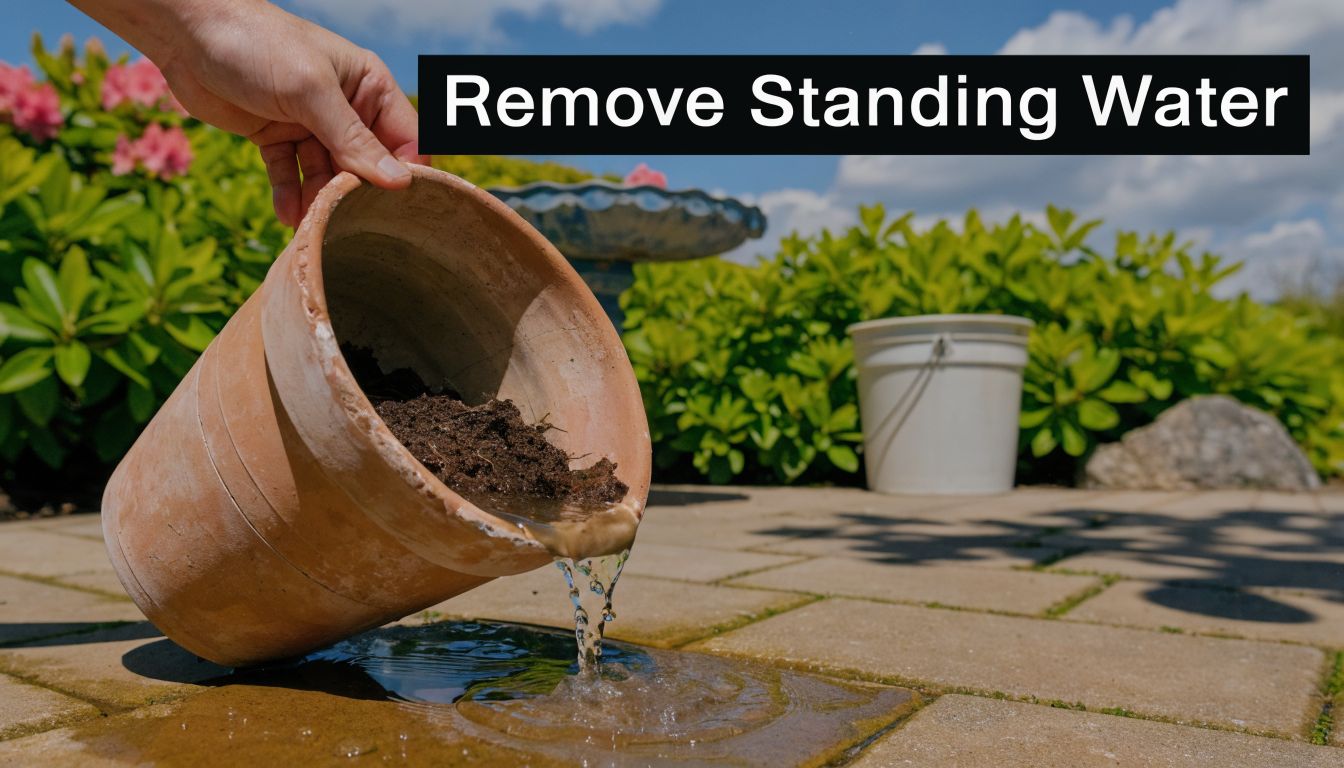
Walk the property slowly after a rain. Don’t just look at the obvious spots. Check the little places where water sits unnoticed.
- Empty containers: Buckets, toys, saucers, wagons, tarps, and wheelbarrows all catch enough water to matter.
- Clean gutters: Clogged gutters hold standing water and keep nearby fascia and garden edges damp.
- Refresh birdbaths and pet bowls: Regular dumping and refilling prevents them from becoming breeding sites.
- Check drains and low areas: If water lingers, improve grading where possible or change how often irrigation runs.
- Inspect covers and tarps: A sagging grill cover or kiddie-pool cover can hold water in a hidden pocket.
Reduce daytime resting areas
Adult mosquitoes don’t spend the whole day flying around biting people. They rest in protected, humid places and come out when conditions are right.
That’s why yard maintenance matters more than many homeowners realize.
- Trim dense shrubs: Open up lower branches where shade and moisture collect.
- Cut back groundcover near seating areas: Ivy, overgrown hostas, and thick ornamental beds create ideal shelter.
- Keep grass from getting shaggy along edges: Fence lines and the backs of sheds are common resting strips.
- Thin clutter under decks and porches: Stored items can hold moisture and create cool hiding zones.
A mosquito problem rarely starts at the patio table. It usually starts twenty feet away in a damp resting area or a hidden water source.
Keep prevention realistic
Source reduction is essential, but it doesn’t mean you failed if mosquitoes are still present after cleanup. In Northwest Indiana, pressure often comes from beyond a single property line. That’s why cleanup should be viewed as the foundation, not the whole solution.
If you’re looking for a broader yard-care perspective, garden pest prevention strategies from Leaves & Soul offer practical ideas for making outdoor spaces less inviting to pests overall. For mosquitoes, the biggest takeaway is simple: remove water, reduce shade-packed clutter, and make it harder for the next cycle to get established.
The Professional Solution Barrier Treatments in Crown Point IN
A Crown Point yard can look cleaned up and still stay buggy at dusk. That happens all the time here because our humid summer air, shaded fence lines, and heavier clay soil keep pockets of moisture around longer than homeowners expect. Big box store sprays often give a quick drop in activity, then the problem returns because the treatment was too broad, too light, or applied in the wrong places.
What a barrier treatment actually does
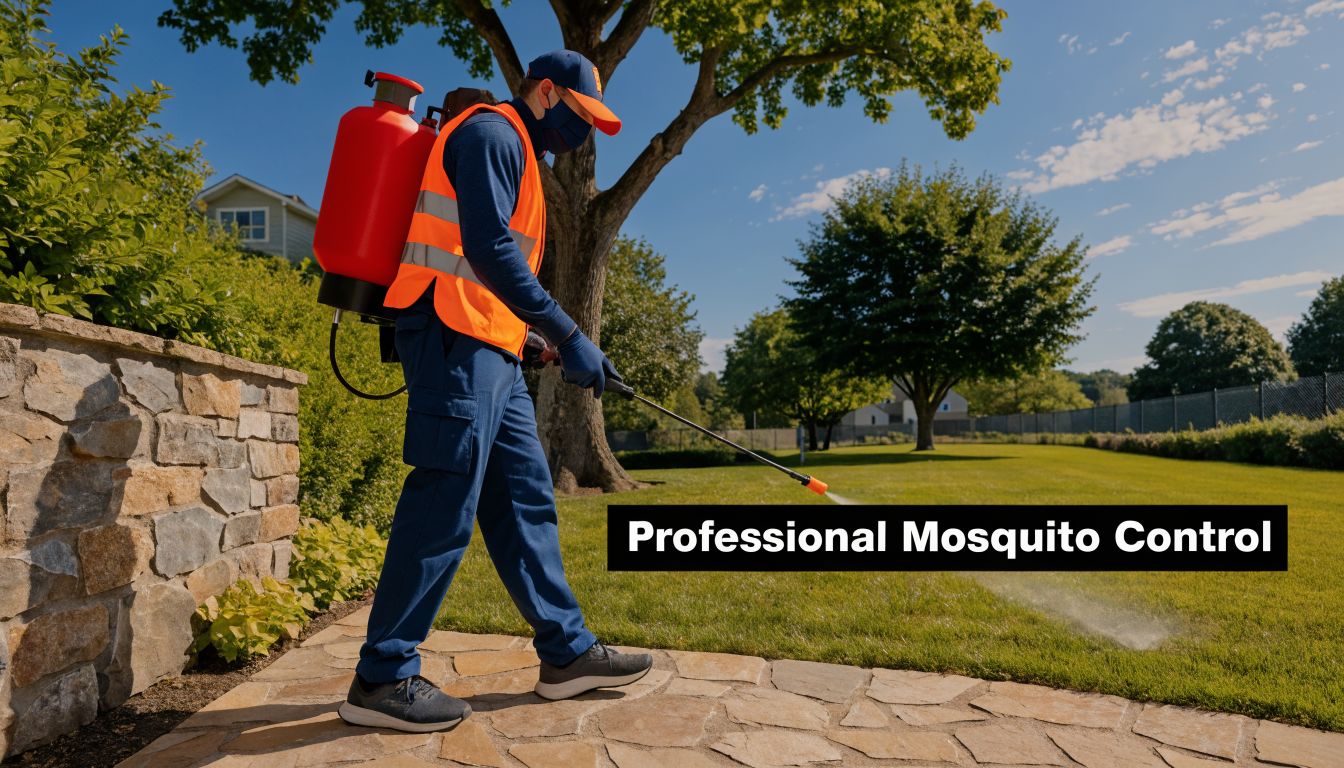
A barrier treatment targets the parts of the yard that keep producing bites. In Northwest Indiana, that usually means the shaded side of shrubs, low tree lines, damp edges along fences, under-deck corners, and other protected vegetation where adult mosquitoes settle during the day. The goal is to treat the resting zones they repeatedly use, not just mist the open grass and hope for the best.
That distinction matters on local properties.
In Crown Point, the center of the lawn is often the least important part of the job. Mosquito pressure usually builds around the perimeter, especially where dense plantings hold humidity after rain or irrigation. Clay-heavy soils make that worse because water does not drain as quickly as it does in sandier ground.
Why professional products and placement hold up better
Professional mosquito work is stronger because of two things. Product choice matters, and placement matters just as much.
Some professional formulations are designed to leave a residual on foliage and other target surfaces, which is why licensed programs can keep pressure down longer than many over-the-counter aerosols or foggers. The label for Bifen IT, for example, describes residual use on planted areas and outdoor surfaces where mosquitoes harbor. That does not mean every treatment lasts the same amount of time on every property. Rain, irrigation, sun exposure, and plant density all affect performance. But it does explain why trained application to the right zones usually outperforms a quick weekend spray from the hardware store.
On a Northwest Indiana property, I would rather see a careful application to the shaded harborage areas than a heavy, wasteful pass across the whole yard. That gets better control and uses material more responsibly.
Why professional programs work better than one-product DIY fixes
Mosquito control in a real yard is rarely solved by a single retail product. One homeowner may buy a fogger for adult mosquitoes, then granules for the lawn, then dunks for water features, and still miss the actual pressure points around arborvitae, hostas, or the damp strip behind a shed.
A professional program is built around the property itself. It accounts for where mosquitoes rest, where family activity happens, how the yard holds moisture, and how often the site needs service during the season. That is the practical value of a local service such as mosquito treatment for lawns. The work is aimed at the zones that drive the problem, not the parts of the yard that are easiest to spray.
Why professional application is safer and more practical
Licensed technicians are trained to read labels, mix correctly, and apply products where they belong. That matters around patios, play sets, pet routes, pollinator-friendly beds, and any area with standing water concerns. It also matters in neighborhoods where yards sit close together and moisture pressure can carry over from one property to the next.
DIY sounds simple until it turns into repeated mixing, pump maintenance, timing around weather, and retreating through the hottest stretch of the season. Some homeowners are willing to do that. Many are not, and many still do not get consistent results because the treatment pattern is off.
Here’s a closer look at how treatment zones are approached in practice.
What works and what doesn’t
A few patterns show up again and again on mosquito calls in Crown Point.
- Works well: treating dense foliage, shaded borders, under-deck edges, and perimeter harborage on a consistent schedule
- Works poorly: spraying only open turf where mosquitoes are seen after they start flying
- Works well: matching residual treatment to the yard’s moisture and plant density
- Works poorly: relying on candles, coils, or occasional fogging for season-long relief
Good mosquito control is methodical. In Northwest Indiana, it also has to be local, because our humidity, vegetation, and slow-draining clay soils change how a yard behaves after every rain.
Working with The Green Advantage What to Expect
A lot of homeowners put off calling because they assume the process will be complicated or sales-heavy. It shouldn’t be. Mosquito service is most useful when it’s straightforward and built around the property, not around pressure.
First contact and scheduling
The process usually starts with a phone call or online request. What matters here is clear communication. Homeowners want to know whether the company serves Crown Point and nearby Northwest Indiana areas, how mosquito service is scheduled, and what kind of treatment approach makes sense for the property.
Good office support helps because mosquito concerns are often time-sensitive. People are trying to solve a problem while the season is active, not plan for some vague future need.
Property review and treatment planning
Once service is moving, the next step is evaluating the property itself. A yard with dense arborvitae, low wet spots, and a shaded fence line needs a different approach than a newer open lot with one problem corner behind a shed.
That review usually looks at:
- Resting areas such as shrubs, ornamental beds, under-deck spaces, and heavy perimeter growth
- Breeding opportunities including containers, drainage problems, and recurring water-holding spots
- Use patterns so treatment supports where the family spends time outdoors
This is also where expectations get set. If neighboring moisture is high, or if the yard has heavy pressure, it helps to be clear that mosquito service reduces activity significantly but doesn’t create a magical outdoor bubble.
Treatment day and follow-up
On treatment day, homeowners should expect a focused application to likely mosquito harborages and perimeter areas, not a random blanket spray. The point is to place material where mosquitoes contact it, while being mindful of how the yard is used.
Follow-up matters too. Mosquito control is seasonal. Weather changes, growth changes, and pressure changes. A good service relationship gives homeowners a point of contact when activity shifts or conditions on the property change.
Homeowners usually feel better about mosquito service once they understand the plan. Clarity removes a lot of the hesitation.
Your Path to a Mosquito-Free Yard in Northwest Indiana
The best answer to what is the best mosquito repellent for yards isn’t one retail product sitting on a shelf. In Northwest Indiana, the most reliable answer is a layered strategy.
Use personal repellents when you need direct protection. A strong DEET product makes sense when people are outside and need skin-level defense. Use patio devices when the problem is concentrated in one seating area. Remove standing water and trim back dense hiding spots because mosquitoes take advantage of every weak point in the yard. But when the goal is season-long relief across the property, professional barrier treatment is usually the step that changes the experience the most.
That’s especially true in Crown Point, where humidity, rainfall, clay-heavy soils, and nearby water features all work against simple one-and-done fixes. A local mosquito plan has to hold up under local conditions. Otherwise, homeowners end up spending time and money repeating the same partial solution.
If you’re also improving how you use your outdoor space, it can help to think beyond pest treatment alone. Better seating layout, drainage improvements, and smarter outdoor design all contribute to comfort. For homeowners planning upgrades, Moore Construction Co. outdoor solutions offer useful ideas for making a backyard more functional without overspending.
The main point is simple. You shouldn’t have to surrender your yard every summer evening. If mosquitoes are dictating when your family can be outside, it’s time to stop guessing and start treating the problem like the local, seasonal pest issue it is.
If you’re dealing with mosquitoes in Crown Point or nearby Northwest Indiana communities, contact The Green Advantage to schedule a pest inspection, request a quote, or talk through a practical mosquito control plan for your yard.