
You walk into the bathroom late at night, flip on the light, and see a small brown insect dart across the baseboard with a pair of pincers at the back. Most Crown Point homeowners who find an earwig indoors have the same first reaction. They assume something is seriously wrong, or that the problem started inside the house.
Usually, it starts outside.
In Northwest Indiana, earwigs are a common moisture-driven nuisance pest. They settle into mulch beds, damp soil, leaf litter, clogged gutters, window wells, and shaded foundation areas. When outdoor conditions stay wet, they move closer to the home. Then they slip inside through gaps around doors, utility penetrations, and foundation cracks. If you're searching for pest control near me, exterminator near me, or pest control in Crown Point, IN, you're probably not just looking for bug facts. You're looking for a permanent fix that makes sense for this area.
That matters, because generic internet advice often leaves out the local piece. Crown Point and nearby Northwest Indiana communities deal with humidity, wet spring conditions, heavy mulch use, and drainage problems that can keep earwig pressure going even after a homeowner tries traps or store-bought sprays. A lasting solution has to account for that.
An Unwelcome Visitor in Your Crown Point Home
Earwigs look worse than they are. Their pincers make people think they're dangerous, aggressive, or destructive to the house itself. In most homes, they aren't a structural pest like termites, and they don't mean your home is unsanitary. They're a nuisance pest that follows moisture and shelter.
That said, nuisance doesn't mean harmless to your comfort.
A steady stream of earwigs in bathrooms, basements, laundry rooms, garages, or near patio doors is a sign that conditions around the home are supporting them. In Crown Point, that often means damp mulch against the foundation, wet soil around downspouts, cluttered garden beds, or basement humidity that stays high enough to keep them comfortable.
Why homeowners in Crown Point keep seeing them
Earwigs are active where it's dark, cool, and damp. That makes our region a natural fit for them, especially during wetter stretches of the season. Homes with shaded foundations, dense planting beds, older weather sealing, or recurring drainage issues tend to see the most activity.
A few common situations bring them inside:
- Foundation moisture from poor grading, oversaturated mulch, or water holding near the house
- Entry gaps around thresholds, siding transitions, weep holes, and utility lines
- Basement conditions where damp air and low light give them a daytime hiding place
- Outdoor harborage such as leaf piles, stones, edging, stacked firewood, and thick ground cover
Practical rule: If you only kill the earwigs you can see, but you don't change the moisture and shelter conditions around the house, they'll keep coming.
What concerned homeowners usually need most
Panic isn't necessary. A clear plan is what's needed.
The right approach starts with identifying where earwigs are hiding, what is keeping those areas damp, how they're entering the structure, and whether the problem is limited to a few hot spots or spread across the whole perimeter. Once you know that, the treatment becomes much more straightforward.
For homeowners looking for residential pest control in Crown Point, the value isn't in a quick knockdown alone. It's in stopping the cycle that keeps sending earwigs back to the same property.
Understanding Why Earwigs Have Invaded Your Space
Earwigs don't invade randomly. They go where the environment works for them. In Crown Point and the surrounding Northwest Indiana area, that usually means properties that stay damp longer than expected, especially around the foundation.
The outdoor conditions that attract earwigs
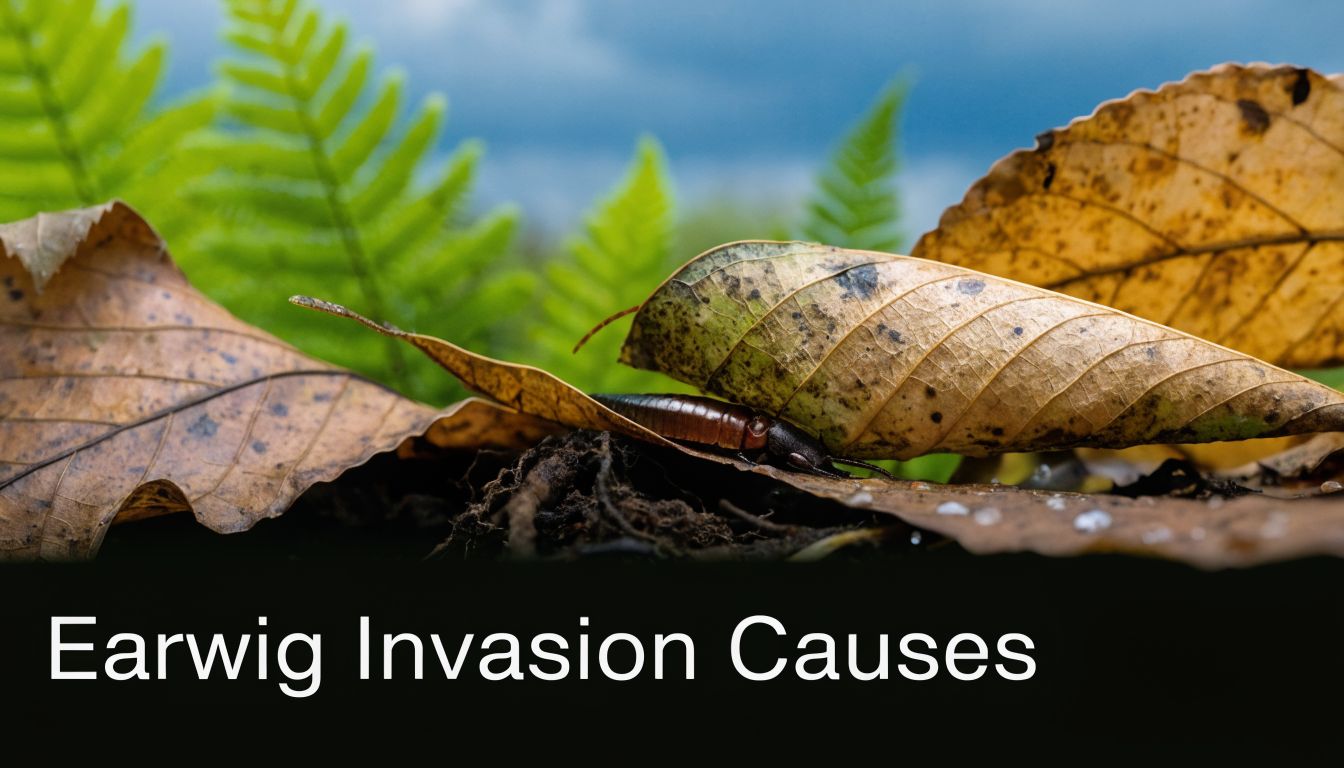
Earwigs spend most of their time outside. During the day, they tuck themselves into protected areas. At night, they forage and wander. Around a home, the most common hiding zones include mulch, wet leaves, yard timbers, pavers, flower beds, and any spot where organic material holds moisture close to the soil.
In Northwest Indiana, several property features make this worse:
- Mulch piled against the home keeps the soil cool and damp near the foundation
- Clogged gutters or short downspouts dump water right where earwigs want it
- Dense plantings shade the soil and slow drying
- Window wells and basement areaways trap moisture and debris
- Leaky spigots and hose connections create a constant wet zone
Those same conditions can also support other nuisance pests. Homeowners who notice earwigs often also deal with spiders, ants, and occasional invaders that use the same protected areas around the structure.
Why DIY advice often misses the real issue
A lot of earwig advice online focuses on catching them. That's helpful, but it leaves a major gap. For Northwest Indiana homeowners with ongoing moisture pressure, declining trap catches don't always tell the full story. The issue may be improving, or the insects may be avoiding an exhausted trap or shifting to another hiding area. The University of Minnesota earwig guidance highlights this maintenance problem and supports the need for continued monitoring and environmental correction through earwig nuisance insect management guidance.
That distinction matters.
If catches drop, a homeowner may assume the problem is gone. In practice, earwigs often remain active in mulch beds, behind siding edges, under thresholds, or in a damp basement corner that never fully dried out.
When earwig activity changes, the question isn't only how many you caught. It's whether the property stopped giving them what they need.
What earwigs usually mean, and what they don't
Earwigs are a sign of a moisture and harborage issue. They are not the same kind of warning sign as termites or carpenter ants. They aren't chewing through structural wood and they aren't turning your house into a nest site the way some other pests can.
Still, they tell you something useful about the property:
| What you’re seeing | What it often points to |
|---|---|
| Earwigs in bathrooms or laundry rooms | Humidity, condensation, or nearby entry points |
| Earwigs near sliding doors or garage doors | Exterior gaps plus damp perimeter conditions |
| Earwigs around basement walls | Moisture retention outside or inside the lower level |
| Earwigs in mulch beds and flower borders | Harborage close to the foundation |
Once you understand that relationship, how to get rid of earwigs becomes less about chasing individual bugs and more about changing the environment that's supporting them.
Immediate Steps You Can Take for Earwig Control
If you've just started seeing earwigs, there are a few practical steps you can take right away. These methods can reduce activity, help you monitor where the pressure is strongest, and buy you some relief while you decide whether the issue needs professional treatment.
They work best when you use them together instead of relying on a single trick.
Start with simple trapping
Earwigs like tight, dark shelter. That's why rolled newspaper, corrugated cardboard, and similar hiding-style traps can collect them overnight. The goal isn't just to remove a few insects. It's to learn where they're concentrated.
A more deliberate version uses corrugated cardboard as a trap material. The Utah State guidance notes that combining food-grade Diatomaceous Earth with corrugated cardboard traps can yield 200 to 500 earwigs per trap per night during peak infestations, and applying DE at 0.5 to 1 lb per 1,000 sq ft can deliver 90 to 100% mortality in 24 to 48 hours under the right dry conditions, according to Utah State earwig control guidance.
Place traps where earwigs already want to hide:
- Near entry points by patio doors, garage thresholds, and basement access doors
- At the edge of mulch beds where the foundation meets landscaping
- Around plant bases in dense or shaded beds
- Beside cluttered storage areas in garages or unfinished basements
Check them regularly. If you stop servicing traps, they stop telling you much.
Use DE the right way
Diatomaceous Earth can be useful, but only if it's applied thinly in dry areas where earwigs will cross it. Broadcast piles are less effective than a light barrier in the right location. Focus on dry foundation edges, protected voids, and indoor crack-and-crevice areas where moisture isn't constantly breaking it down.
The biggest limitation in Indiana is weather. The same Utah State guidance states that DE effectiveness drops by 80% after irrigation or rain, which is exactly why many homeowners feel like it works one day and fails the next when the yard stays damp.
That doesn't make DE worthless. It means expectations need to be realistic.
Cut off the easiest hiding spots
If you want visible improvement fast, remove the things earwigs use during the day.
Try these first:
- Pull mulch back from the foundation so the house edge can dry more easily.
- Remove leaf litter and grass clippings from borders, corners, and under shrubs.
- Lift and inspect stored items in the garage, especially cardboard and fabric near the floor.
- Reduce unnecessary watering around beds that stay wet overnight.
- Dry indoor problem areas with better ventilation where possible.
Field insight: Traps and DE are often most useful as a short-term reduction plan. If the moisture source stays in place, the population usually rebuilds.
What these steps can and can't do
DIY control can absolutely help with light activity. It can also reveal whether the problem is concentrated in one part of the yard or spread around the structure. But homeowners often run into the same wall: they catch earwigs for a few days, sightings drop, then the problem comes back after rain, irrigation, or another humid stretch.
That pattern doesn't mean you failed. It means the property still has the conditions earwigs need.
For a minor issue, these immediate steps may be enough. For a recurring issue, they usually become part of a larger treatment and prevention plan rather than a complete answer by themselves.
The Green Advantage Professional Earwig Extermination
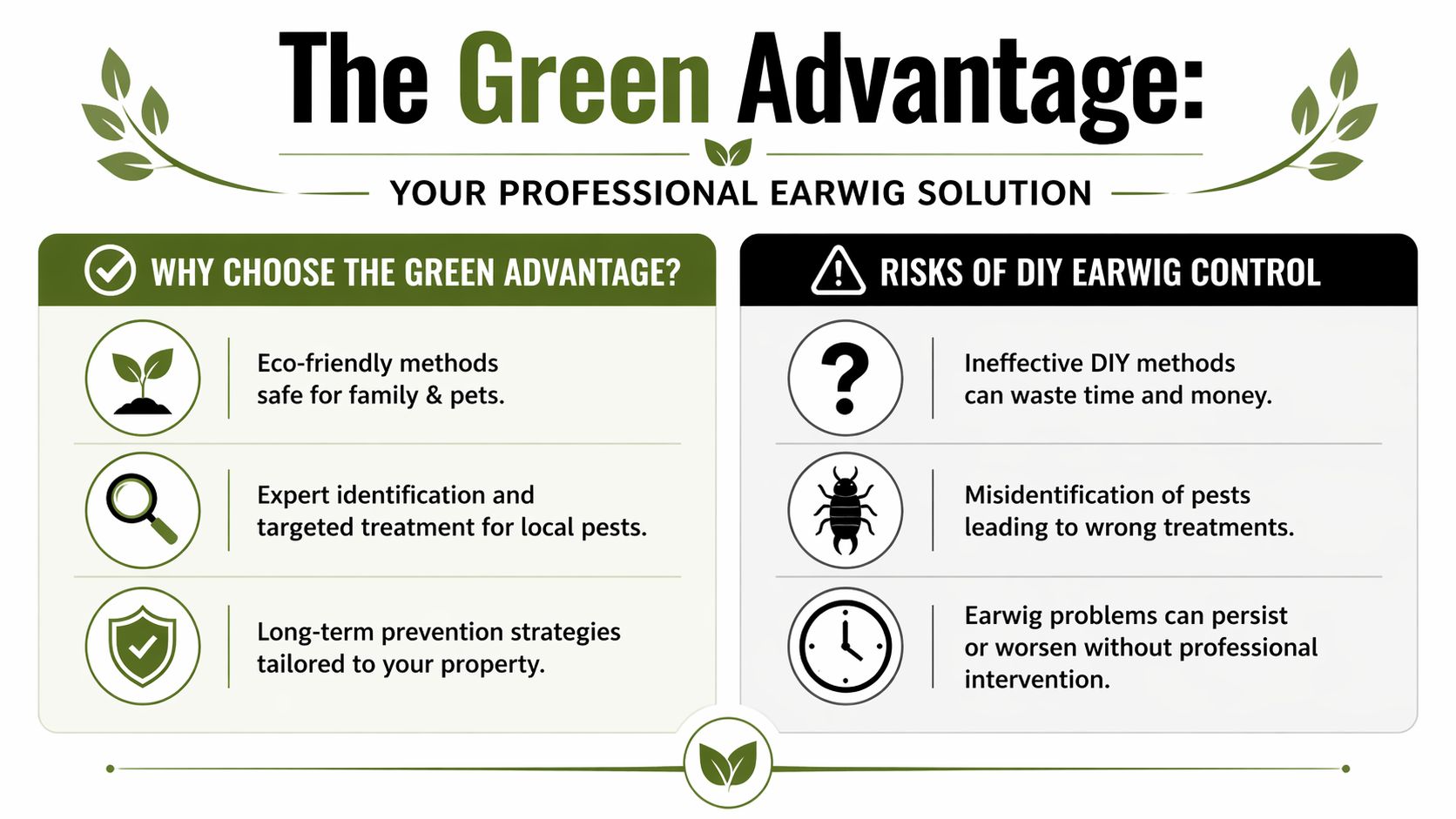
When earwigs keep coming back, the difference between DIY and professional service is precision. Earwigs don't respond well to random spraying or occasional trap placement when the whole perimeter is supporting them. A lasting result usually comes from treating the structure correctly and correcting the conditions that are feeding the problem.
What a professional treatment actually looks like
A proper exterior earwig treatment is not a casual hose-end spray around the yard. Verified field guidance for perimeter earwig control describes a liquid insecticide application in a 3-foot band around the foundation and 3 feet up the exterior wall, using a calibrated sprayer and a coarse spray pattern that improves adhesion and reduces drift. Applied correctly, this approach achieves an 85 to 95% reduction in earwig populations within 7 to 14 days and can provide residual protection for up to 90 days, while also outperforming baits by 2x in high-moisture regions like Indiana, based on the perimeter treatment protocol shown in this professional earwig perimeter treatment reference.
That kind of result depends on technique.
The application has to hit the actual earwig travel zones and harborage points, including cracks, crevices, weep holes, and utility entries. Over-application isn't better. Under-mixing isn't good enough. Precision matters because the goal is control with as little unnecessary exposure as possible.
Why store-bought spraying often disappoints
Most homeowners who try sprays make one of three mistakes. They spray too lightly and miss the hiding zones. They spray too broadly and waste product where it won't help. Or they treat once, see a brief change, and then assume the issue should be over.
Professional service works differently because the technician looks at the whole pest picture:
- Where earwigs are harboring
- How they are entering
- Which side of the structure holds moisture
- Whether the issue is isolated or perimeter-wide
- What environmental corrections need to happen alongside treatment
One option homeowners in Crown Point can consider is a broader integrated pest management approach, which combines inspection, targeted treatment, and habitat correction instead of leaning on one tactic alone.
A good earwig service doesn't just knock down what you see tonight. It reduces the population outside, where the next wave would have come from.
DIY vs. Professional Earwig Control
| Factor | DIY Methods | The Green Advantage Professional Service |
|---|---|---|
| Treatment coverage | Often limited to visible areas or a few traps | Targets the exterior perimeter, entry points, and problem zones |
| Consistency | Depends on homeowner time, weather, and repeated maintenance | Built around a structured service plan and inspection findings |
| Moisture diagnosis | Usually guessed at | Evaluated as part of the property-specific problem |
| Product placement | Commonly overapplied or underapplied | Applied with calibrated equipment and targeted technique |
| Long-term control | Often partial when conditions stay favorable | Combined with prevention recommendations for lasting relief |
Where professional service makes the most sense
Professional earwig control is usually the better route when:
- Sightings keep returning after rain or humid weather
- You find earwigs in multiple rooms or around several sides of the home
- The home has a basement, crawlspace, or recurring drainage issue
- You also want broader residential pest control or commercial pest control support
- You suspect the same exterior conditions are drawing ants, spiders, or other pests
For homeowners searching exterminator in Crown Point, IN, the most effective service is the one that addresses both the infestation and the environment that's keeping it alive.
Preventing Future Earwig Infestations in Your Indiana Home
The long game with earwigs is moisture control. That sounds simple until you own a home in Northwest Indiana and realize how many different ways moisture can collect around a structure.
Start outside, not inside
Earwigs usually build pressure around the yard before they show up in the house. That means prevention begins with the outdoor area and the drainage pattern around the foundation.
Focus on these property adjustments:
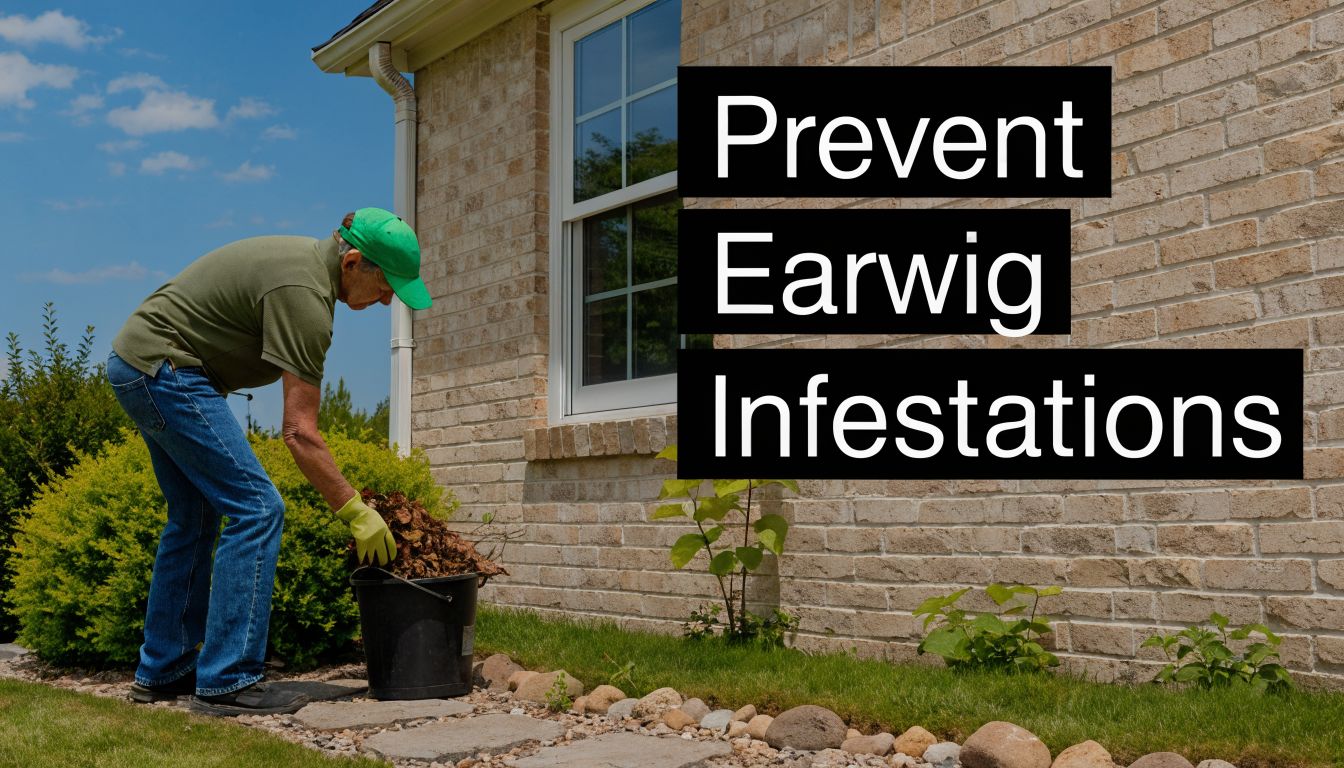
- Keep mulch back from the house. Guidance commonly recommends maintaining mulch 6 to 12 inches away from the foundation, which helps reduce the damp shelter earwigs use near entry points.
- Clean gutters and extend water flow away from the structure so water doesn't keep saturating the perimeter.
- Trim dense plant growth that traps moisture and shades the soil all day.
- Pick up leaves and organic debris before they mat down into a cool hiding layer.
- Repair leaking spigots and hose bibs that create a constant damp patch.
These changes help with more than earwigs. A drier perimeter is also less inviting to ants, spiders, and some rodent activity.
Why generic moisture advice often falls short here
Homeowners are often told to "reduce moisture" as if that's a quick fix. In Crown Point, it isn't always that easy. Verified guidance specific to this topic notes that generic advice often fails in Northwest Indiana because of regional groundwater issues and humidity patterns, and that professional services may need to provide site-specific moisture assessments when simple DIY drying isn't enough, as discussed in this overview of earwig moisture problems and control limits.
That local reality is why some homes struggle even after the owner does many things right.
You may improve the obvious issues and still need to address grading, drainage flow, window well water retention, or persistently damp lower-level spaces. If your yard tends to hold water, this practical guide on how to improve soil drainage gives a useful overview of drainage concepts that can support a broader property plan.
Indoor prevention matters too
Once the exterior pressure comes down, tighten the house itself.
Key prevention steps indoors include:
- Seal cracks and utility gaps where insects can slip inside from the exterior wall void
- Refresh weather stripping on ground-level doors
- Reduce basement clutter that gives earwigs a quiet daytime hiding area
- Dry laundry, utility, and storage spaces that tend to stay humid
- Watch recurring damp corners instead of assuming they're harmless
This short visual gives a helpful look at common pest-proofing ideas homeowners can apply around the home:
The prevention mindset that works
The best prevention plan is not one big change. It's several smaller corrections that make the property less comfortable for moisture-loving pests.
Homeowner takeaway: Earwig prevention works when the yard dries faster, the foundation stays cleaner, and the structure gives insects fewer protected entry points.
That same mindset supports broader residential pest control. A property that's dry, sealed, and well maintained gives fewer opportunities to many of the seasonal pests common in Crown Point.
Working with Your Local Crown Point Pest Experts
Most homeowners call for help only after they've already tried a few things on their own. They've swept up earwigs in the bathroom, set out traps in the garage, or sprayed the base of the house and hoped for the best. What they want next is a straightforward process and an honest answer about what it will take to fix the problem.
That's where a local service experience matters.
What the process usually looks like
It starts with a phone call or message. You explain what you're seeing, where you're seeing it, and whether the problem seems tied to a certain room, side of the home, or weather pattern. From there, scheduling is based on the urgency of the issue and the kind of inspection needed.
At the property, the technician looks beyond the insects themselves. Earwig work is often about conditions, not just sightings. That means checking the perimeter, mulch lines, moisture-prone areas, likely entry points, and any indoor spaces where activity has been reported.
After the inspection, you should expect clear communication:
- What was found around the home and inside problem areas
- What likely caused the activity based on conditions at the property
- What treatment is appropriate for the situation
- What prevention steps the homeowner should handle between visits
Why local service feels different
When you hire a local company, you're also hiring familiarity with local pest patterns, weather effects, and common property layouts. That's especially valuable in Crown Point, where drainage, seasonal moisture, and shaded landscaping can all shape pest activity.
Choosing local service also keeps money in the community. If that matters to you, this short piece on supporting local businesses in your community is a good reminder that local hiring has benefits beyond the immediate job.
How to prepare before service day
A little preparation helps the visit go more smoothly. Make note of where you've seen activity, when it tends to happen, and whether rain or watering seems to increase it. If you've used any DIY products, mention that too. It helps the technician avoid guesswork.
For a practical checklist, homeowners can review this guide on how to prepare for pest control.
Good service should feel simple. You shouldn't have to decode vague recommendations or wonder what happens next. You should know what the issue is, what the treatment addresses, and what to watch for afterward.
Frequently Asked Questions About Earwigs
Are earwigs dangerous to people or pets
Earwigs are mainly a nuisance pest. Their appearance alarms people more than their actual risk. The bigger concern in most homes is repeated indoor sightings and the moisture conditions that allowed them to thrive nearby.
Why do I mostly see them at night
Earwigs prefer dark, protected conditions. They usually hide during the day and become more active after dark. That's why many homeowners think the problem appeared suddenly when it has been building outside for some time.
Will earwigs go away on their own
Sometimes light activity fades with drier weather or a change in conditions, but recurring infestations usually don't resolve for good without addressing moisture, harborage, and entry points. If the property still offers shelter and damp soil, the problem often returns.
Do earwigs mean I have a dirty house
No. Earwigs are usually drawn by environmental conditions, not poor housekeeping. A very clean home can still have earwigs if the exterior perimeter stays damp and the structure has accessible gaps.
What's the fastest way to reduce them
For immediate reduction, trapping and removing outdoor hiding spots can help. For recurring problems, a properly targeted perimeter treatment and property-specific prevention plan usually provide more reliable relief than repeated DIY efforts.
Are store-bought products enough
They can help in small, isolated situations. They often fall short when earwigs are established around multiple sides of the home or when moisture conditions keep rebuilding the population. That's when professional diagnosis becomes more important than adding more product.
Can the same conditions attract other pests
Yes. Damp mulch, clutter, foundation gaps, and wet lower-level spaces can also support ants, spiders, and other occasional invaders. Solving the earwig issue often improves broader pest pressure around the home.
When should I call a professional
Call when sightings continue despite cleanup and trapping, when activity spreads indoors, or when the yard and foundation seem to stay damp no matter what you do. That's usually the point where you need a treatment plan tied to the actual conditions at the property, not another round of guesses.
If earwigs keep showing up around your Crown Point home, the right next step is a clear inspection and a treatment plan built for Northwest Indiana conditions. The Green Advantage helps homeowners identify where earwigs are coming from, reduce the outdoor pressure around the structure, and address the moisture and harborage issues that keep the problem going. If you need practical help from a local pest control team, reach out to schedule an inspection or request a quote.