
A Crown Point summer evening can turn fast. Dinner is on the patio, the kids are in the yard, and within a few minutes everyone is swatting at ankles and arms instead of relaxing. That pattern tells you something important. Mosquitoes already have breeding spots and resting cover somewhere on the property.
Natural enemies can help lower pressure, but they do not finish the job by themselves. Homeowners get the best results when they treat predators, beneficial microbes, and habitat changes as support tools, then pair them with a professional program that targets the areas where mosquitoes hatch, hide, and rebound after rain.
That is the practical value of learning which mosquito enemies matter in Northwest Indiana. Some are useful only in specific settings, like a pond or water garden. Others work well on larvae but do nothing for the adult mosquitoes biting people near decks, fences, shrubs, and shaded mulch beds.
At The Green Advantage, we build mosquito control in layers. We look for standing water, heavy shade, dense vegetation, and recurring hot spots, then match the treatment plan to the property. Natural methods still have a place in that process. If you have a pond, for example, targeted mosquito control options for backyard ponds can support what nature is already doing without asking one tactic to carry the whole load.
The sections below focus on eight natural mosquito enemies and where each one fits for Crown Point homeowners. Some are worth encouraging. Some are limited. All of them make more sense when they are part of a layered defense instead of a stand-alone fix.
1. Mosquitofish (Gambusia affinis)
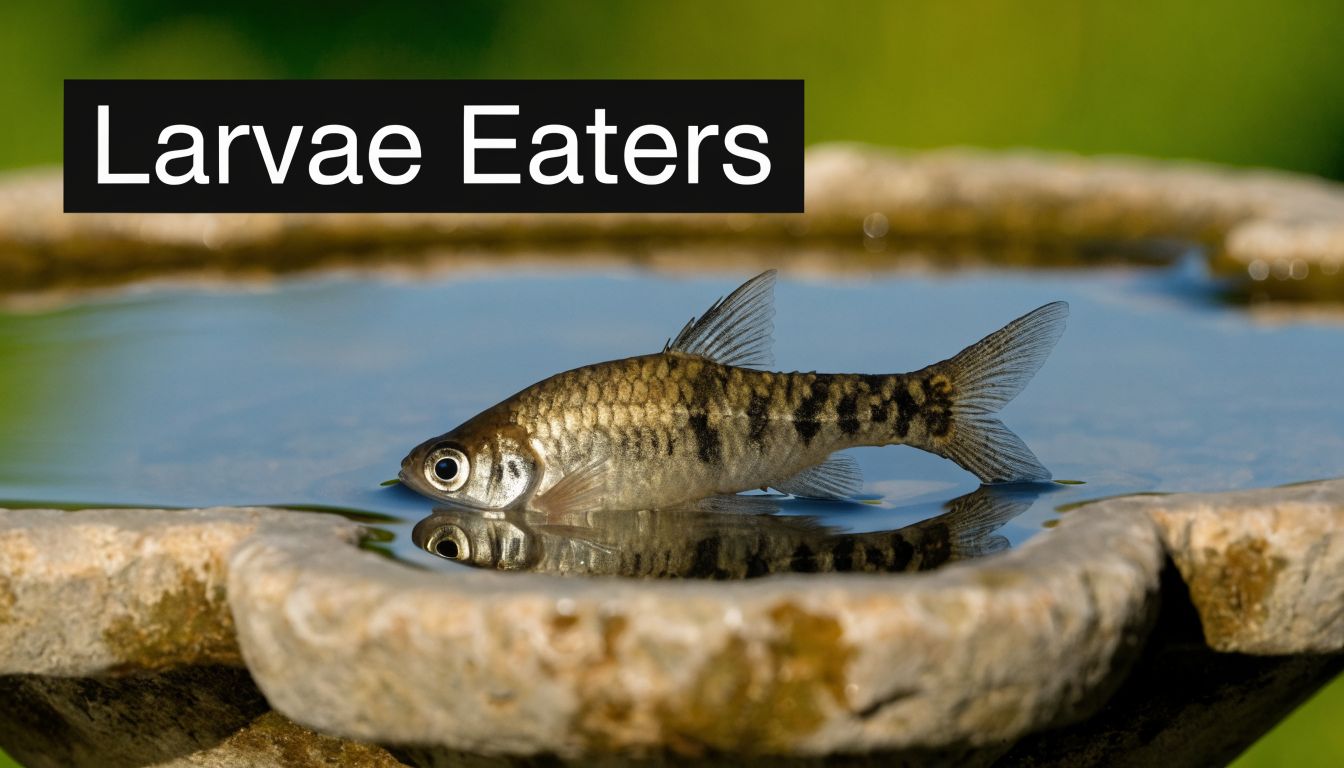
Mosquitofish get mentioned in almost every conversation about natural mosquito control, and for good reason. In the right water feature, they can help keep larvae from maturing into biting adults. If you have a decorative pond, a larger water garden, or a contained feature that holds water consistently, fish can become part of the solution.
Where homeowners get misled is assuming fish belong in every wet area. They don't. A birdbath that gets dumped and refilled often, a temporary puddle near the downspout, or a clogged gutter won't support fish. Mosquitoes love those spots anyway, which is why fish are useful only in select parts of the property.
Where mosquitofish actually help
The best fit is a stable backyard pond or similar feature where larvae have time to develop. In those settings, fish patrol the surface zone where mosquito larvae tend to hang. That makes them more practical than trying to rely on random wildlife visits.
For Crown Point homeowners, fish make more sense on properties with:
- Permanent water features: Decorative ponds and lined garden ponds can support fish more reliably than temporary standing water.
- Minimal chemical exposure: Chlorinated or pesticide-treated water works against the whole point of biological control.
- Enough depth for stability: Shallow, overheated water creates stress and makes fish less dependable.
If your property includes a pond, our guide to controlling mosquitoes in ponds is the better next step than dropping fish into every water source you see.
Practical rule: Fish help where water stays put. They don't solve the containers, gutters, toys, tarps, wheelbarrows, and drainage pockets that produce a lot of backyard mosquitoes.
The trade-offs homeowners should know
Mosquitofish are not a whole-yard mosquito program. They're a targeted larval tool for a specific environment. That's the distinction that matters in real service work.
I also tell homeowners to think about maintenance before adding any aquatic control. If the pond is full of algae, if runoff regularly changes water quality, or if the feature gets neglected for stretches of the summer, fish won't perform the way people expect. They still need a livable habitat.
Used correctly, fish can reduce production in one hotspot. Used carelessly, they become one more backyard idea that sounds good and changes very little.
2. Dragonflies and Damselflies (Odonata order)
A Crown Point homeowner sees dragonflies working a pond edge at dusk and assumes the mosquito problem is finally handling itself. I understand why. Dragonflies and damselflies do hunt mosquitoes in both life stages. The young develop in water and feed on other aquatic organisms. The adults patrol the yard and grab flying insects on the wing.
They help. On properties with stable water, good plant cover, and limited chemical disruption, they can take some pressure off a yard. They also tell you something useful about the site. If dragonflies are active around a pond or drainage area, that habitat is supporting predator life instead of functioning as dead water.
The trade-off is simple. Dragonflies do not hunt mosquitoes exclusively, and most residential lots do not support enough of them to bring biting activity down to an acceptable level on their own. That gap matters in real service work, especially after rain cycles create fresh breeding pockets in gutters, toys, tarps, corrugated drain lines, and shaded containers. Those small sources often produce the mosquitoes homeowners feel first, even when natural predators are present nearby.
Where dragonflies actually fit in a yard plan
Dragonflies and damselflies are strongest around permanent or semi-permanent water features. A pond edge, detention area, marshy border, or vegetated drainage swale gives them a place to develop and hunt. If your property has that kind of environment, keep it healthy. It can support beneficial insect activity through the season.
Many Crown Point yards do not. A tidy suburban lot with short turf, scattered ornamentals, and a few rain-catching containers may still have mosquito pressure without having the habitat needed to hold a meaningful dragonfly population. That is why we treat dragonflies as a helpful layer, not the main control strategy.
To see what healthy dragonfly behavior looks like around water, this short video is useful.
How to encourage them without creating more mosquito habitat
The goal is to support predators while denying mosquitoes easy breeding sites.
- Use native aquatic and marginal plants: Emergent vegetation gives immature dragonflies cover and gives adults places to perch and hunt.
- Keep water moving or biologically balanced: A neglected feature can still produce mosquitoes if nothing is interrupting larval development.
- Avoid broad-spectrum insecticide use near ponds: Spraying beneficial habitat carelessly can reduce the predators you want to keep.
- Remove small standing-water sources elsewhere in the yard: Even a healthy pond ecosystem will not offset buckets, toys, clogged gutters, or low spots holding water after storms.
At The Green Advantage, this is how we approach natural enemies in practice. We want dragonflies present where the property can support them, and we also address the hidden breeding sites and resting areas that natural predation does not reliably cover. That combination gives homeowners a layered defense instead of a backyard ecology project that looks promising but leaves people swatting mosquitoes every evening.
3. Bacillus thuringiensis israelensis (Bti)
A Crown Point yard can look tidy and still produce mosquitoes. The usual culprit is water that stays put just long enough in a rain barrel, planter, drain extension, or low spot after a storm. Bti helps at that stage, before those larvae turn into the adults that drive people indoors at dusk.
Bti is a naturally occurring soil bacterium used in products like Mosquito Dunks and other larval treatments. For homeowners who want a practical, eco-aware step, it is one of the most useful tools on this list because it targets developing mosquitoes in standing water without depending on fish, insects, or other wildlife to do the work.
Best places to use Bti
Use Bti where water cannot be dumped every day or two. Around Crown Point homes, that often means rain barrels, neglected planters, ornamental containers, sump discharge areas that stay soggy, and equipment around garages or sheds that catches rain.
The value of Bti is straightforward. Many backyard mosquito issues start in small, overlooked water sources, not just ponds or wetland edges. If those sites stay wet for several days, they can keep producing new adults.
Bti does have limits. Rain can dilute treatments, overflowing containers can reduce effectiveness, and fresh standing water after a storm may need attention again. Good results come from inspection and timing, not from a single application and wishful thinking.
Where homeowners go wrong with Bti
The biggest mistake is treating only the obvious water and missing the small breeding sites around the rest of the property. Another common problem is using Bti in places that should be emptied, cleaned, or corrected so they stop holding water in the first place.
A better routine looks like this:
- Treat water that stays put: Rain barrels, decorative containers, and other standing water sources that cannot be dumped regularly are strong candidates.
- Inspect after storms: New puddling and refilled containers can restart mosquito production quickly.
- Dump what you can: Plant saucers, buckets, toys, wheelbarrows, and similar items are better emptied than treated over and over.
- Watch for hidden problem spots: Clogged gutters, corrugated drain pipes, and tarps with low pockets often get missed.
At The Green Advantage, we use Bti as one layer in a broader mosquito reduction program. Some breeding sites are good DIY targets. Others point to drainage issues, dense harborage, or recurring pressure from neighboring conditions that need a more complete service plan. That is the trade-off homeowners should understand. Bti is excellent for larval control in the right places, but it works best alongside property inspection, habitat correction, and professional treatment that reduces the adult mosquitoes natural controls do not catch reliably.
4. Copepods (Mesocyclops and Macrocyclops species)
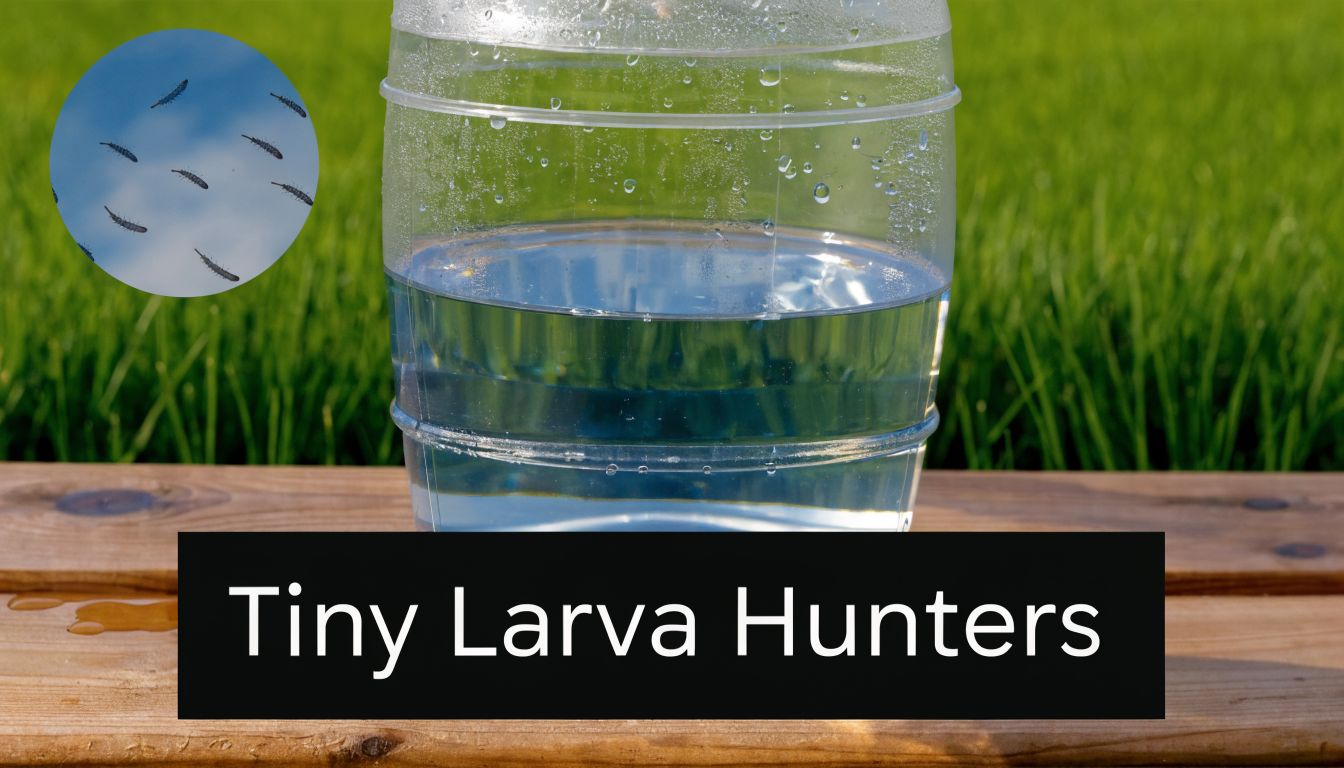
Copepods don't get much attention from homeowners because you can't see them working the way you can see fish or dragonflies. They're tiny aquatic crustaceans, and in the right container they can prey on mosquito larvae before those larvae ever turn into biters.
Many mosquito problems in residential neighborhoods don't start in large ponds; they start in containers. Rain barrels, decorative containers, neglected plant vessels, and water-holding odds and ends around the yard are classic trouble spots. That's where copepods can make sense.
Why container habitats matter so much
A lot of backyard mosquitoes don't need a pond. They need a small protected pocket of water that sits undisturbed long enough for larvae to develop. That's why container-focused controls deserve more attention than they usually get in generic articles.
Copepods are a niche tool, but they fit that niche well. They can be introduced into some water storage setups where fish aren't practical. If you're trying to reduce mosquito production without adding vertebrates or relying only on repeated chemical inputs, they're worth knowing about.
Their limits in a Crown Point yard
The problem is consistency. Copepods need the water source to remain suitable. If you dump the container, scrub it out, chlorinate it, or let it dry repeatedly, you've wiped out the control agent too. That's not a failure of the organism. It's just a mismatch between the tool and the site.
They're also not the easiest solution for a homeowner who wants fast visible results. If the yard already has active biting pressure, copepods may support prevention in select containers, but they won't give the immediate relief people usually want before a cookout or family gathering.
A predator that works inside a barrel or container is useful. It just doesn't protect the whole property unless the rest of the yard is managed too.
For local homeowners, a professional inspection adds value. We can tell whether a property's mosquito issue is mostly container-driven, vegetation-driven, drainage-driven, or a mix. That saves you from overinvesting in a niche tactic that only addresses one corner of the problem.
5. Entomopathogenic Fungi (Isaria and Metarhizium species)
You walk into the backyard at dusk, the grass looks fine, there is no obvious standing water, and you're still getting tagged by mosquitoes near the shrubs and the shaded side of the house. That kind of activity points to a part of mosquito control many homeowners miss. Adult resting harborage matters, not just breeding water.
Entomopathogenic fungi such as Isaria and Metarhizium are part of that conversation. These naturally occurring fungi infect certain insects, including mosquitoes, and they tend to perform best where shade, moisture, and protected foliage give them a fair shot. In practical terms, that means they fit specific microclimates on a property, not the whole yard.
That distinction matters in Crown Point.
A fungal tool can support mosquito reduction in dense plantings, low branches, damp fence lines, and other protected zones where adults hold during the day. Those are also the places our technicians pay close attention to during service visits. If a yard has heavy vegetation and lingering humidity, biological controls may have a role. If the site is open, sunny, and dry, results are less reliable.
Homeowners should treat fungi as a targeted option, not a do-everything fix. They are slower and more condition-dependent than the average DIY product people reach for before guests arrive. If the goal is fast relief across an active yard, you still need the rest of the program to do the heavy lifting.
On a well-managed property, fungi make the most sense alongside other steps:
- Resting zones are mapped first. Mosquitoes do not use every part of the yard equally, so shaded harborage gets priority.
- Moisture issues are corrected where possible. Overwatering, clogged drainage, and overgrown plantings can keep adult shelter too favorable.
- Larval sources are handled separately. Container water, low spots, and hidden breeding pockets still need direct control.
- Professional treatments cover the broader pressure. Natural tools can support suppression, but they rarely give whole-property protection by themselves.
Experience proves vital. A homeowner can read about fungal biocontrol and assume it belongs in every natural mosquito plan. In the field, the trade-off is straightforward. It can be useful in the right pocket of the yard, but it does not replace inspection, source reduction, or targeted mosquito service.
At The Green Advantage, we look at these natural enemies as supporting players in a layered defense. They help explain how mosquito pressure can be reduced with fewer broad disruptions to the yard's ecology. For consistent bite relief in Crown Point, though, they work best as part of a broader program that matches the property, the season, and the actual mosquito pressure.
6. Parasitic Flies (Piscicola and Culex species parasitoids)
You can have a yard with healthy plantings, decent drainage, and fewer broad insecticide disruptions, and still never notice the small parasitoids working in the background. That is the reality with parasitic flies tied to mosquito systems. They are part of local insect pressure, but they are not a homeowner tool in the way Bti or source reduction is.
For Crown Point properties, their value is indirect. A yard that supports more beneficial insect activity usually has better ecological balance overall, and that matters because mosquito pressure builds fastest where water, shelter, and low predator pressure all line up. Parasitic flies fit into that bigger picture. They help suppress insects in natural settings, but they do not give predictable, property-wide relief before a weekend cookout or during a heavy hatch.
That trade-off matters.
Homeowners sometimes read about biological control and assume every natural enemy belongs in the same category of usefulness. It does not. Some options can be purchased, placed, or applied with decent consistency. Wild parasitoids cannot. You cannot introduce them on schedule, count their coverage, or rely on them to clean up active resting areas around dense shrubs, fence lines, or damp corners of the yard.
That is also why the broader biological control field keeps growing. Analysts at Roots Analysis project that the global agri natural enemy pest control market will reach USD 40.16 billion by 2035 from USD 18.5 billion in 2024. The practical takeaway for mosquito work is simpler than the headline. Natural enemies matter, but each one has limits, and some are far more usable than others on residential properties.
For homeowners who want to protect beneficial insects without giving mosquitoes free rein, the goal is controlled pressure, not blanket disruption.
- Keep planting diversity in the yard: Mixed plant structure and native flowering plants support a wider range of beneficial insects.
- Avoid broad, indiscriminate applications: Random spraying can reduce helpful insect activity without solving the breeding source.
- Pair natural support with targeted mosquito service: Professional treatments should focus on harborage, activity zones, and breeding pressure instead of covering the whole property without a plan.
- Use habitat changes that reduce mosquito advantage: Correct standing water, trim overgrown shelter, and manage irrigation so the yard does not stay favorable to mosquitoes.
At The Green Advantage, we treat parasitoids as part of the background ecology, not as the centerpiece of mosquito control. They are one more reason to avoid careless treatment practices. They are also one more reminder that natural methods work best when they are paired with a planned service program that reduces larvae, targets adult pressure, and leaves room for beneficial species to keep doing their part. If you are also considering wildlife-based support, our guide to bat houses for mosquito control covers where that fits and where it falls short.
7. Native Bats (Myotis and Lasionycterus species)
You sit outside on a warm Crown Point evening, the sun drops, bats start cutting across the yard, and it feels like the mosquito problem should ease up. Homeowners notice that activity and understandably hope bats will carry more of the load than they do.
Bats do help. Native species such as Myotis and Lasionycterus feed at the same time mosquitoes are active, so they add real nighttime predation that daytime insect-eaters do not. That makes them a useful part of a healthier yard ecology, especially near woods, ponds, drainage areas, or neighborhoods with established tree cover.
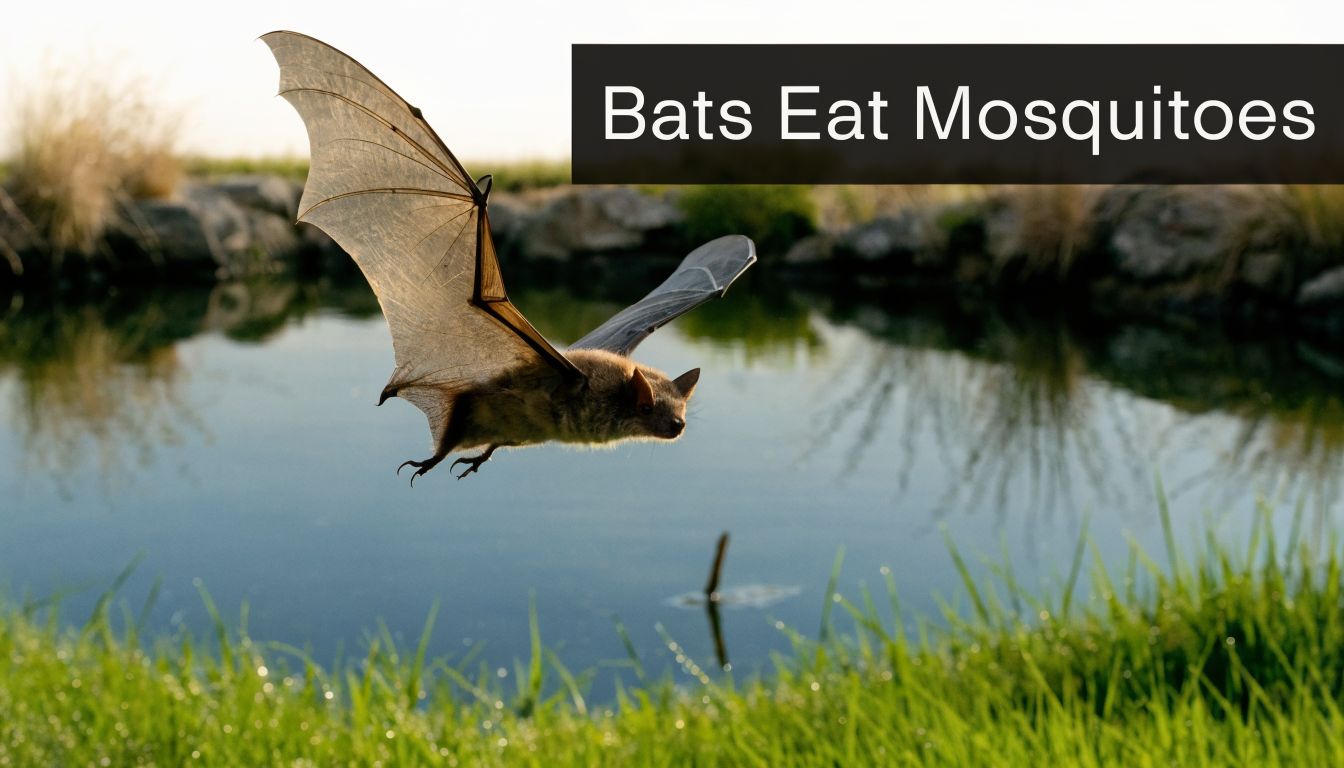
What matters for homeowners is the trade-off. Bats are habitat-dependent, slow to establish, and inconsistent from one property to the next. Even where they are present, they are feeding across a broad area, not working your patio, playset, or back door with the kind of focused pressure needed to make outdoor living comfortable during peak mosquito season.
That is why we treat bats as a supporting layer, not the main control plan. If you want to encourage them, our guide on where bat houses fit into mosquito control covers placement, expectations, and the limits homeowners need to understand before investing time in that approach.
Another practical point gets missed in online advice. Birds are often brought up in the same conversation, but common claims about purple martins solving mosquito problems do not hold up well in real residential settings. A regional overview from West Baton Rouge Parish explains why purple martins are not considered a dependable mosquito control strategy, largely because their feeding habits do not line up with mosquito pressure the way homeowners assume, as outlined in this natural mosquito predators overview from West Baton Rouge Parish.
At The Green Advantage, we like bat-friendly habitat where it fits the property. We just do not ask wildlife to do a service job. The better approach is layered control. Reduce breeding sites, support the predators already present, and use professional mosquito treatments to bring down adult activity in the places your family uses. That combination gives Crown Point homeowners a more reliable result than waiting on bats to solve a heavy mosquito season by themselves.
8. Entomopathogenic Nematodes (Steinernema and Heterorhabditis species)
After a wet week in Crown Point, the yards that stay soggy tell a different mosquito story than the ones that dry out fast. Water may not be sitting in plain view, but shaded soil, mulch beds, and low areas can stay damp long enough to support pest pressure around the edges of a property. That is where entomopathogenic nematodes sometimes enter the conversation.
These microscopic roundworms have a real place in biological pest management. For mosquitoes, though, their role is narrow. They are a site-specific support tool for moisture-heavy conditions, not a primary residential mosquito solution.
That distinction matters.
In our area, nematodes may be worth considering around chronically wet ground near water features, drainage swales, or shaded spots that never seem to dry properly. Even then, they work best as one layer in a broader mosquito reduction plan. If the underlying problem is clogged gutters, neglected containers, or adult mosquitoes resting in dense shrubs, nematodes will not solve the main source.
For homeowners, the practical question is not whether nematodes are natural. It is whether they match the site. On some properties, they can complement other biological controls. On many others, the better return comes from correcting drainage, treating actual breeding water, and reducing adult mosquito pressure where people spend time outdoors.
A workable plan usually looks like this:
- Fix chronic wet spots: Regrading, drainage correction, or better water flow addresses the condition that keeps pests active.
- Target true breeding sites: Standing water in containers, basins, and hidden catch points responds better to direct larval control.
- Reduce adult resting areas: Dense vegetation and shaded perimeter zones often need treatment if biting pressure is already established.
- Use nematodes selectively: Apply them where persistent moisture supports their survival and where they fit a larger property plan.
That last point is where professional service matters. Natural controls are useful, but they are uneven from yard to yard. At The Green Advantage, we look at where mosquitoes are breeding, where they are harboring, and which natural controls fit the property instead of forcing a one-size-fits-all answer. Nematodes can support that effort in the right conditions, but they do not replace a professional mosquito reduction program that covers larval sources, adult activity, and the areas your family uses most.
One related finding is worth keeping in view. A 2024 study identified Nepidae as the most effective predator against key mosquito vectors in natural habitats, with backswimmers and other aquatic insect groups also contributing. For Crown Point homeowners with ornamental ponds or rain-holding features, that supports a habitat-based approach that works alongside professional mosquito service instead of relying on any single predator to carry the load.
Comparison of 8 Mosquito Natural Enemies
| Item | Implementation complexity | Resource requirements | Expected outcomes | Ideal use cases | Key advantages |
|---|---|---|---|---|---|
| Mosquitofish (Gambusia affinis) | Low–Medium: stock fish, prepare habitat, seasonal monitoring | Shallow-to-deep standing water, initial stock, occasional water quality checks | Continuous larval predation in suitable waters; high daily consumption per fish; seasonal limits in cold climates | Ponds, retention basins, birdbaths, decorative water features | Chemical-free, self-replicating, cost-effective long-term control |
| Dragonflies & Damselflies (Odonata) | Low: habitat creation and protection; not easily introduced | Shallow water, native aquatic plants, pesticide-free areas | Dual-stage control (nymphs eat larvae, adults eat adults); variable seasonal populations | Natural ponds, gardens, wetlands, ecosystem-focused sites | Dual-action lifecycle control; no inputs required; indicator of healthy habitat |
| Bacillus thuringiensis israelensis (Bti) | Low: simple homeowner or technician application | Commercial dunks/granules/sprays; reapplication every 7–10 days | Rapid larval mortality (24–48 hrs); highly specific but short aquatic persistence | Rain barrels, birdbaths, gutters, retention ponds, multiple small water sources | EPA-approved, safe for non-targets, targeted and user-friendly |
| Copepods (Mesocyclops/Macrocyclops) | Medium: sourcing, acclimation, and initial establishment | Purchased cultures, careful shipping/acclimation, stable small water containers | Continuous larval predation in small volumes; establishment takes 1–2 weeks | Containers, planters, rain barrels, small cisterns | Effective in tiny water volumes; safe and low-maintenance once established |
| Entomopathogenic Fungi (Isaria, Metarhizium) | Medium–High: timely applications and humidity management | Commercial formulations, repeat treatments, high-humidity environments | Adult (and some larval) mortality over 5–14 days; variable by humidity and weather | Shaded vegetation, porches, humid microclimates, integrated programs | Targets adult mosquitoes; non-toxic to humans; complements larval methods |
| Parasitic Flies (tachinids, phorids) | Low: habitat encouragement; not commercially introduced easily | Native vegetation, diverse habitat, avoidance of broad-spectrum insecticides | Gradual adult suppression over weeks; seasonally fluctuating populations | Native landscaping, diverse gardens, conservation-focused properties | Self-sustaining natural control that targets adults; no chemical inputs |
| Native Bats (Myotis, Eptesicus) | Medium: habitat installation and public outreach; multi-season establishment | Bat houses/roosts, nearby water and insect prey, community education | Nighttime reduction of flying adults; effects vary with season and weather | Properties with water features, large yards, twilight mosquito activity | Very high nightly insect consumption; once established, no recurring cost |
| Entomopathogenic Nematodes (Steinernema, Heterorhabditis) | Medium: correct application and moisture management required | Commercial nematode products, moist soil/wet habitats, timely application | Larval infection and death in 24–48 hrs; can persist in moist soil for weeks | Moist soil breeding sites, low-lying yards, greenhouse margins | Safe for non-targets; complements water-surface larvicides; useful in soil/moist habitats |
Your Complete Mosquito Defense Plan with The Green Advantage
You step outside on a July evening in Crown Point, the grill is hot, the kids are in the yard, and within ten minutes everyone is swatting. In that moment, a bat house, a few dragonflies over the pond, or a packet of Bti dunks may help at the margins, but they rarely solve the whole problem on their own.
That is the practical reality with mosquito natural enemies. They do real work, but each one works in a narrow lane. Mosquitofish need the right water feature. Copepods and Bti only help where larvae are developing. Dragonflies and bats reduce pressure, yet they do not clear adult mosquitoes out of dense shrubs by the patio after a wet week. Homeowners who want usable outdoor space need a layered plan that matches how mosquitoes live on the property.
At The Green Advantage, we start by reading the yard the way a technician should. We look for where mosquitoes breed, where adults hide during the day, and what keeps the problem going after rain or irrigation. In Crown Point, that often means more than one source. A clogged gutter extension, a low spot near the fence, wet leaf litter behind ornamental grasses, and containers near the back door can all contribute at the same time.
Natural controls still have an important place in that plan. We encourage the ones that fit the site and skip the ones that sound good but are unlikely to change your bite pressure. If you want a broader look at what insects eat mosquitoes, that background is useful. The key is knowing where those predators help and where professional reduction work needs to take over.
A strong mosquito program usually includes four parts:
- Source reduction: Emptying containers, correcting drainage problems, cleaning gutters, and removing small water-holding spots that keep producing larvae.
- Biological support: Using Bti where it fits, preserving beneficial habitat, and supporting natural predators when the property can realistically sustain them.
- Targeted treatment: Applying professional mosquito control to shaded foliage, fence lines, groundcover, and other adult resting sites that DIY efforts often miss.
- Follow-up: Rechecking after storms, irrigation changes, and midsummer plant growth, because mosquito pressure shifts fast in Northwest Indiana.
The goal is not to throw every tool at the yard. The goal is to match the tool to the problem.
That matters in Crown Point because our summer pattern changes quickly. A property can be quiet early in the week and active by the weekend after rain, humidity, and a few days of thick vegetation growth. Homeowners usually catch the obvious standing water. What gets missed are the hidden larval sites and the cool, shaded harborage areas where adults wait until evening.
That is where local field experience helps. We tell clients when a natural method is worth supporting and when it is mostly cosmetic. A pond may be a good fit for biological control. A heavily shaded backyard with persistent adult activity near seating areas usually needs direct treatment as part of the plan. Both can be true at once.
Many mosquito customers also ask us about wasps, spiders, rodents, and general perimeter pest issues. That overlap is normal. The same conditions that make a yard comfortable for mosquitoes often support other pest activity around the home, so it makes sense to address the property as a whole instead of treating one symptom at a time.
If mosquitoes are keeping your family indoors, The Green Advantage can help you take your yard back with a practical, locally informed mosquito reduction plan. We inspect the property, identify breeding and resting zones, explain which natural allies make sense for your site, and build a layered program that gives Crown Point homeowners real relief.