
If you're in Crown Point and you've suddenly noticed black and red bugs covering a sunny wall, crowding around windows, or showing up on the inside of the house when the weather cools off, you're dealing with one of Northwest Indiana's most familiar fall pest problems. Boxelder bugs have a way of showing up all at once. One day the siding looks clean. The next day it feels like your home has become a landing zone.
That surprise is what bothers most homeowners. It isn't damage that sends people searching for how to get rid of boxelder bugs. It's the sheer volume, the stains they can leave behind, and the feeling that if they're on the outside now, they'll soon be in the kitchen, bedroom, or sunroom.
In this part of Indiana, that pattern is common. Homes with warm southern or western exposure tend to see the worst of it, especially when nearby boxelder or maple trees give these insects a place to feed before they start looking for shelter. By the time many people notice them, the bugs have already chosen the house.
Homeowners start with the same questions. Are they dangerous? Will they breed indoors? Should you spray inside, vacuum them up, or focus on the exterior? The short answer is that boxelder bugs are mostly a nuisance, but the method matters. Some approaches give quick relief. Others reduce the problem next season.
A Familiar Sight in Crown Point Your Boxelder Bug Problem
A Crown Point homeowner usually notices boxelder bugs the same way. The afternoon sun hits the back or side of the house, and suddenly the siding is dotted with moving black bodies edged in red. A few hours later, some have made their way to the window track. Then a few more show up in an upstairs room.
That kind of invasion feels worse than it is, but it still needs attention.
Why this catches people off guard
Boxelder bugs don't act like many of the pests homeowners worry about year-round. They don't announce themselves with chewed wires, nests in the pantry, or visible damage to flooring. Instead, they show up seasonally and in clusters. That's why the problem feels sudden, even when the conditions around the house have been attracting them for weeks.
In Crown Point and nearby Northwest Indiana communities, the pattern is familiar:
- Sunny walls become gathering points. Bugs collect on warm exterior surfaces before trying to slip into gaps.
- Window areas draw attention first. Homeowners often spot them near trim, screens, and upper-story glass.
- Indoor sightings create anxiety fast. Even though these insects aren't the same kind of threat as roaches or rodents, seeing them inside still feels like a home invasion.
Practical rule: When you see boxelder bugs indoors, the primary problem is almost always outside. The interior sighting is a symptom of an exterior entry issue.
What homeowners usually try first
Many homeowners start with what they have on hand. A paper towel. A broom. Maybe an aerosol from the garage. That reaction is understandable, but it creates more mess than progress.
Crushing them can smear surfaces. Sweeping them can scatter them. Interior sprays often miss the main issue, which is that the house already gave them an opening.
The better approach is to think in layers:
- Remove the bugs you can see
- Stop more from getting in
- Reduce the outdoor pressure around the structure
That order matters. If you only do step one, the problem comes right back.
For homeowners searching for pest control near me, exterminator near me, or pest control in Crown Point, IN, boxelder bugs are a good example of why seasonal pest work has to be timed correctly. Just like mosquito control, rodent exclusion, spider control, and other recurring Northwest Indiana pest issues, success depends on understanding when pests move and where they enter.
Understanding the Boxelder Bug Invasion in Northwest Indiana
Boxelder bugs are easy to mistake for something more serious because of how many can gather in one place. They look dramatic. Their behavior is annoying. But once you understand what they're doing, the control strategy makes much more sense.

What they are and how to identify them
Boxelder bugs (Boisea trivittata) are native to the eastern United States and primarily feed on boxelder, maple, and ash trees. Adults are about ½ inch long, black with reddish-orange markings, and the younger nymphs are bright red. They don't bite, they don't sting, and they don't transmit diseases, but they can gather by the hundreds, stain surfaces, and release a foul odor when crushed, according to Purdue and USDA guidance on boxelder bugs.
That last detail matters. Homeowners often think the smell means they're dealing with a dangerous insect. Usually, it's just what happens when these bugs are smashed.
If you're trying to confirm what you're seeing, this insect identification page can help you compare common pests seen around Northwest Indiana homes.
Why they show up on houses in fall
Purdue notes that boxelder bugs become nuisances in fall when they're seeking overwintering sites. In practical terms, that means they aren't showing up because your home is dirty or because there's food in the pantry. They're looking for protected spaces to ride out colder weather.
In Northwest Indiana, this often plays out in a clear sequence:
- Late summer and fall activity increases
- Bugs gather on sun-warmed exterior walls
- They slip into cracks around windows, doors, siding, and other gaps
- Warm spells later in winter or early spring make them active again
They don't choose homes at random. They follow warmth, shelter, and access.
Why nearby trees matter
Boxelder trees are the best-known host, but maple and ash can also support them. That matters in neighborhoods with mature trees and older lots, which is common around Crown Point. If your home has the right sun exposure and nearby host trees, it can become a repeat target year after year.
A few quick identifiers help homeowners separate this from other seasonal pest issues:
| Sign | What it usually means |
|---|---|
| Clusters on sunny siding | Seasonal overwintering behavior |
| Bright red young bugs on or near trees | Active nymph stage outdoors |
| Bugs near windows in winter | Hidden entry from exterior gaps |
| Stains after cleanup | Bugs were crushed instead of removed gently |
What they don't do
A lot of online advice gets muddy here. Boxelder bugs are frustrating, but they aren't termites, bed bugs, or roaches. They don't damage the structure of the house, and they aren't spreading disease inside your living space.
That doesn't mean you should ignore them. It means the right goal isn't panic. The right goal is exterior prevention and smart indoor cleanup.
For homeowners comparing residential pest control options in Crown Point, this is one of those pests where understanding the "why" prevents wasted money on the wrong treatment.
Your First Line of Defense Sealing and Exclusion Tactics
The most effective answer to how to get rid of boxelder bugs is usually less dramatic than people expect. It's not a fogger. It's not spraying every room. It's sealing the structure before the bugs make their move.
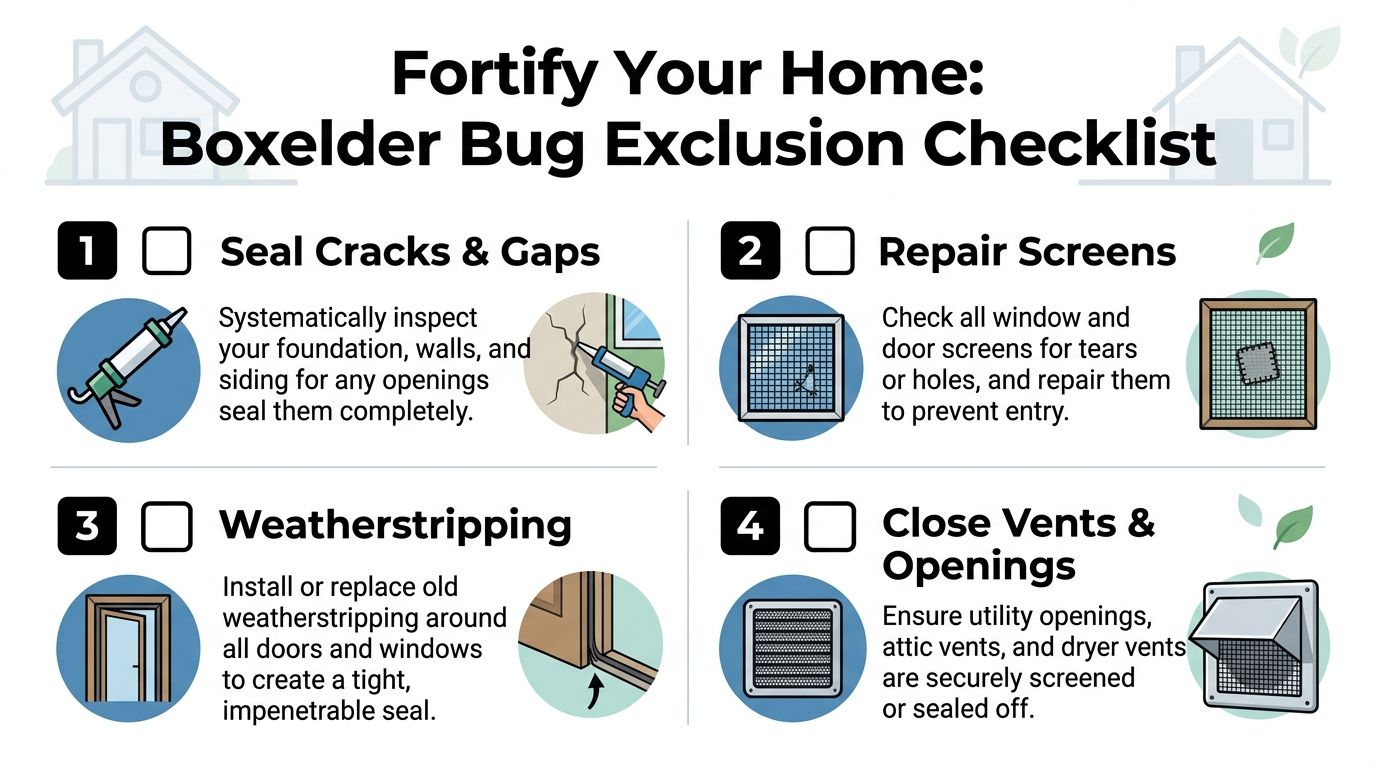
Purdue Extension guidance treats sealing as the primary prevention method, including caulking cracks, repairing screens and doors, and checking attics and crawl spaces before fall, as summarized in this regional boxelder bug prevention overview.
Where to look first
Most boxelder bug entry points aren't huge. They don't need much space. On Northwest Indiana homes, the problem areas are usually predictable.
Start with these:
- Foundation cracks and expansion joints. Even small openings near the base of the home can become access points.
- Window and door trim. Old caulk, separated joints, and loose exterior trim are common trouble spots.
- Siding transitions. Bugs often work into gaps where materials meet.
- Utility penetrations. Check where cables, pipes, and other lines enter the house.
- Attic and crawl space access points. Vents, louvers, and edge details get overlooked often.
- Screens and door sweeps. Torn mesh and worn bottoms on doors make entry easy.
A practical exclusion checklist
Homeowners who want to cut down seasonal invasions should focus on basic physical barriers. This doesn't have to be complicated, but it does need to be thorough.
- Caulk exterior cracks around windows, doors, siding joints, and the foundation.
- Replace damaged weatherstripping so doors and windows close tightly.
- Repair torn screens on windows, soffits, and vents.
- Inspect the attic and crawl space for openings that don't stand out from ground level.
- Check garage door edges where daylight shows through.
- Look at hose bibs and faucet penetrations where bugs can slip inside.
A house doesn't need a major opening to have a boxelder bug problem. It just needs enough neglected gaps to become an easy shelter.
Why timing matters
If you do this work after bugs are already inside wall voids, you've improved the house, but you may still see stragglers. The stronger move is to seal entry points before the fall push begins.
That makes late summer the ideal window for inspection and repair. In Crown Point, that timing lines up with the point when homeowners should also be thinking about other seasonal services like preventative pest treatments, rodent exclusion, and wasp removal before temperatures shift.
The trade-off with DIY sealing
DIY exclusion helps. For many homes, it's the most important first step. But it also depends on patience and detail. Miss a few upper-story gaps or one worn screen frame, and the pressure continues.
This is why many homeowners pair their own maintenance with a broader exterior inspection. If you're already working through trim, siding, and weatherproofing projects, a good complete exterior home maintenance checklist can help you catch the non-pest items that contribute to access problems too.
A sealed home doesn't just help with boxelder bugs. It supports better control of spiders, ants, occasional invaders, and even some rodent issues that start with the same neglected openings.
Managing an Active Boxelder Bug Infestation Yourself
A typical Crown Point call goes like this. The bugs showed up on the sunny side of the house last week, and now a few are turning up on the window sills inside. It feels like an infestation, but indoors, boxelder bugs are usually a nuisance problem, not a dangerous one. They do not bite, they do not damage the house, and they do not reproduce indoors the way ants or roaches do.
What matters right now is cleanup that does not make the mess worse.
What works indoors
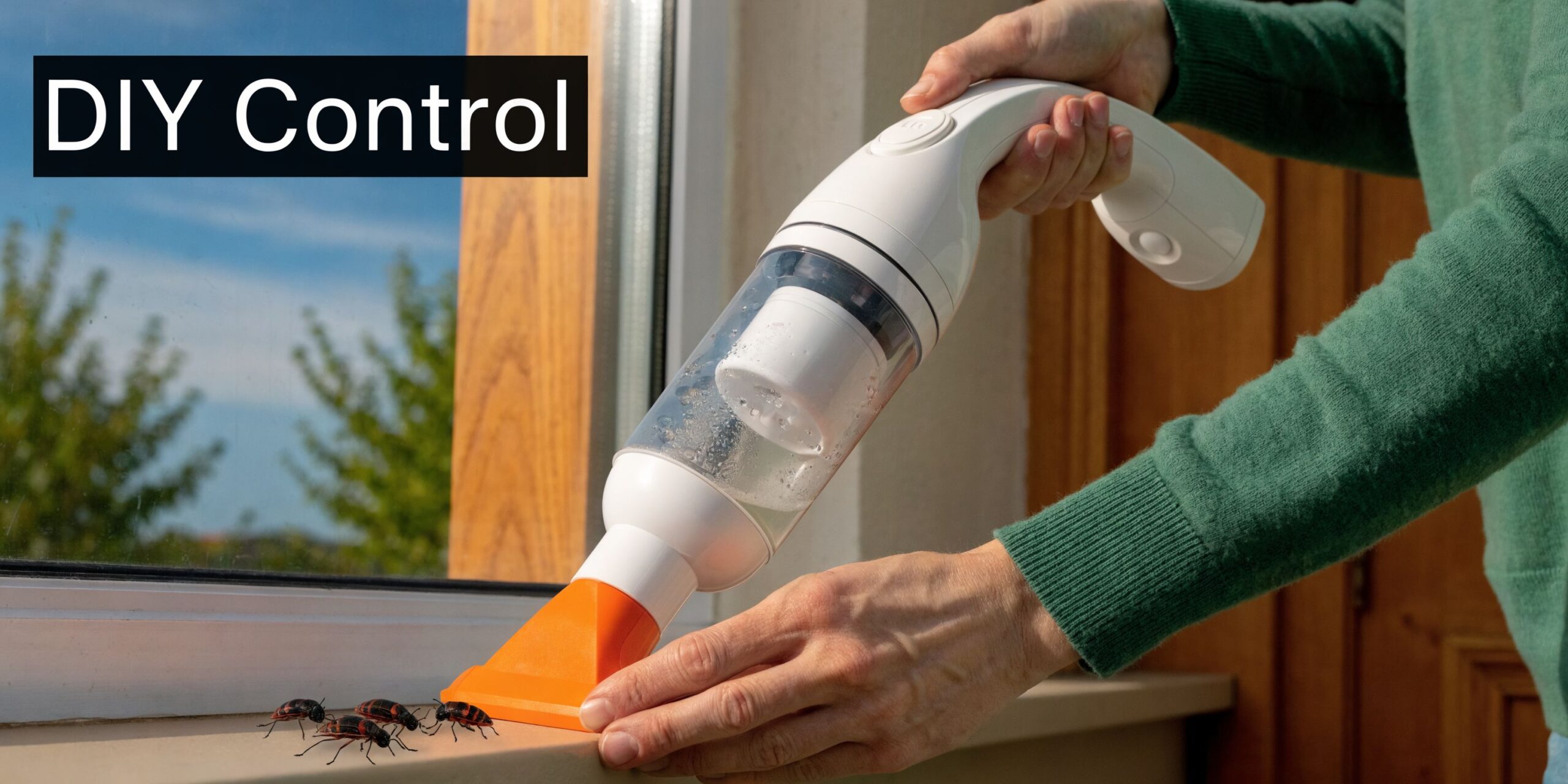
Use a vacuum. That is the cleanest option for active bugs inside.
Sweeping and crushing often leaves behind odor and reddish staining, which extension guidance on boxelder bug management from the University of Minnesota Extension warns can happen when the insects are handled roughly. A small shop vac or a vacuum with a hose works better than a broom for that reason.
A few practical tips make the job easier:
- Vacuum the bugs instead of crushing them. You avoid smears on paint, blinds, and trim.
- Empty the canister or bag promptly. Do not let them sit in the vacuum.
- Slow down around curtains, window tracks, and light-colored surfaces. That is where staining is most noticeable.
- Skip broad indoor spraying unless you are treating a very limited crack or void. Sprays inside living areas rarely solve the source of the problem.
That last point matters. If boxelder bugs are appearing in several rooms, killing the ones you can see will not change the outdoor pressure pushing more toward the house.
What helps outside, and where DIY runs short
If they are clustered on siding, brick, or around a foundation corner, a hose can knock them down and give quick visual relief. Homeowners like this step because the result is immediate.
It is still temporary.
In Northwest Indiana, warm fall sun on south- and west-facing walls keeps drawing them back. If the weather stays mild, you can wash a surface clean one afternoon and see fresh activity again soon after. That is the trade-off with outdoor DIY cleanup. It improves what you see today, but it does not change why they picked that side of the house in the first first place.
Here is the practical breakdown:
| DIY method | Good for | Limitation |
|---|---|---|
| Vacuuming indoors | Fast cleanup without staining surfaces | Does not stop more bugs from showing up |
| Sweeping or crushing | Very little | Often leaves odor and stains |
| Hose treatment outdoors | Knocking visible clusters off siding or trees | Activity often returns in the next warm spell |
| Interior spraying | Killing a few visible bugs | Misses the exterior congregation points |
The mistake I see homeowners make most often
They focus on the room where the bugs appeared.
That is understandable, but with boxelder bugs, the main pressure starts outside. A handful on an upstairs sill usually means they followed warmth and light after settling into wall voids or gaps near the window. It does not mean the house is hosting a growing indoor colony.
This short video gives a useful visual of the kind of bug activity homeowners often notice during cleanup and control:
When DIY is enough, and when it is time to stop chasing them
DIY cleanup is usually enough if the sightings are light, the bugs are mostly staying outside, and you are only finding a few stragglers indoors during seasonal changes.
DIY usually falls short in three situations. The same side of the house keeps loading up every sunny afternoon. Bugs are showing up on upper floors where access points are harder to reach. Or you are vacuuming the same windows every few days and the problem resets.
At that point, the issue is not housekeeping. It is exterior pressure.
That is the part many homeowners in Northwest Indiana find frustrating. Boxelder bugs inside are annoying but not dangerous. The primary challenge is that once fall conditions push them toward the structure, cleanup alone will not give lasting relief. The only long-term answer is reducing that exterior congregation and migration pattern before they keep slipping back in.
The Professional Pest Control Solution for Lasting Relief
The long-term answer to boxelder bugs isn't interior spraying. It's creating a treated exterior barrier where the bugs travel and gather before they enter.
Professional perimeter applications using a synthetic pyrethroid like bifenthrin are applied in a 3-10 ft band around the structure in late summer or early fall, and university IPM programs report an 85-95% reduction in indoor migration after two applications when combined with sealing, according to this professional treatment methodology reference.
Why perimeter treatment changes the result
This is the biggest difference between a homeowner DIY attempt and a professional service call. The work isn't aimed at the random bug you spotted in the bedroom. It's aimed at the movement pattern around the structure.
A proper perimeter strategy focuses on:
- South- and west-facing walls where boxelder bugs collect on warm surfaces
- Foundation lines and exterior transitions where they crawl and gather
- Entry-prone areas around windows, doors, siding details, and utility penetrations
- Seasonal timing before the bugs fully settle into overwintering behavior
That timing is a major reason homeowners get mixed results from store-bought products. If the application happens too late, you're treating after the main migration has already started.
What a professional approach looks like
A solid service isn't "spray the house and hope." It usually includes inspection, treatment, and recommendations for exclusion work the homeowner should finish.
Here is the practical difference:
| Approach | Main target | Expected outcome |
|---|---|---|
| Indoor DIY cleanup | Visible bugs only | Immediate relief, short duration |
| Exterior spot spraying | Clusters you can see | Limited control if timing is off |
| Professional perimeter treatment with sealing | Migration paths and entry pressure | Better seasonal control |
For homeowners who are comparing service options, this is the same general principle behind other outdoor-focused programs. Mosquito control works when the yard and resting areas are treated strategically. Rodent control works when access points are identified and closed. Boxelder bug control follows the same logic. Control the route, not just the symptom.
If you're weighing service options and want a plain-language overview of what a pest company handles, this page on what pest control companies do gives a useful big-picture explanation.
What works better than broad indoor spraying
Broad indoor spraying sounds aggressive, but for boxelder bugs it's often the wrong investment. It can leave homeowners feeling like something major was done while the outdoor pressure remains untouched.
A perimeter-focused program is better because it:
- Intercepts bugs before they get inside
- Targets the season when treatment matters most
- Pairs well with sealing instead of replacing it
- Fits into broader residential pest control and commercial pest control planning
The Green Advantage offers general pest control that includes boxelder bug management for homes and businesses in Northwest Indiana, which is useful for properties that deal with recurring seasonal invaders along with ants, spiders, wasps, or rodents.
Exterior prevention is what gives boxelder bug control staying power. Indoor cleanup only handles the bugs that already got through.
The trade-off
Professional treatment doesn't replace maintenance. If screens are torn and gaps are open, even a strong perimeter program has more work to do. On the other hand, sealing without reducing exterior pressure can still leave homeowners frustrated during peak movement.
The best results come from combining the two. Seal the house. Reduce the pressure outside. Time the work before the fall rush.
That's how you stop chasing boxelder bugs room by room.
Partnering with The Green Advantage in Crown Point
You notice them on the sunny side of the house first. Then a few show up on the windows inside. That usually feels worse than it is.
Boxelder bugs are a nuisance indoors, not a dangerous indoor infestation. They do not damage the structure, they do not breed inside the house, and they do not create the kind of ongoing indoor problem people worry about with roaches or bed bugs. The primary issue in Crown Point and across Northwest Indiana is seasonal pressure from outside, especially when fall temperatures start shifting and south or west-facing walls stay warm.
A key detail many homeowners miss is that indoor activity usually means exterior prevention started too late or the house has easy entry points. Generic interior spraying often misses that. Exterior prevention and perimeter control address the reason the bugs keep showing up, as explained in this boxelder bug behavior and control overview.

What that means for you as a homeowner
Experience matters here. A local technician should look beyond the bugs on the glass and figure out why that side of the home keeps collecting them. In Northwest Indiana, sun exposure, nearby boxelder or maple trees, siding type, trim gaps, and timing all affect how bad the fall movement gets.
That changes the plan. Some homes need minor exclusion work and better timing on exterior service. Others need more attention on one elevation because the problem is concentrated there year after year.
A good inspection should lead to practical steps like these:
- Remove indoor bugs carefully so walls, curtains, and trim are not stained
- Check the exterior for gaps around siding, vents, utility lines, doors, and windows
- Point out repairs that reduce repeat entry
- Apply perimeter treatment where seasonal pressure is highest
That approach saves homeowners from paying for the wrong kind of treatment.
What working with a local pest professional should feel like
The process should be clear. You should know why the bugs are gathering, why they are getting in, what will help right now, and what needs to happen before next fall.
That matters in Crown Point because boxelder bug calls rarely happen in isolation. The same house that has loose screens, dried-out caulk, or trim separation may also be easier for spiders, ants, and other occasional invaders to enter. On commercial properties, the pattern often shows up around entryways, upper windows, and warm exterior walls that draw insects in during seasonal transitions.
The goal is to reduce pressure outside and limit entry before bugs end up on interior windowsills.
Why people call after trying it themselves
I see the same pattern every season. Homeowners vacuum them up, spray a few inside, wipe down the windows, and then call when the same wall lights up again the next warm afternoon.
Usually, one of three things is happening:
- The bugs keep returning after indoor cleanup
- One side of the building gets hit every fall
- The homeowner is tired of temporary relief and wants prevention
That is usually the right time to bring in help. Boxelder bugs confuse a lot of people because they look like a serious infestation once they cluster, but indoors they are mostly an annoyance. The long-term fix is still outside. In Northwest Indiana, timing and perimeter work make the key difference.
For anyone searching for pest control near me, exterminator near me, or commercial pest control in the Crown Point area, the right service should explain the trade-offs and focus on prevention that lasts.
If boxelder bugs are covering your siding, collecting around windows, or showing up indoors each fall, contact The Green Advantage to schedule an inspection or request a quote. A local plan focused on exterior pressure, entry points, and seasonal timing can cut down repeat invasions and help you stop dealing with the same nuisance every year.