
A calm pond should make your yard feel better, not drive everyone back inside before sunset. In Crown Point and across Northwest Indiana, that’s a familiar frustration. A pond looks great in the daytime, but by evening the buzzing starts, people swat at their arms, and the whole backyard becomes harder to enjoy.
Homeowners often assume the fix is simple. Add a fountain, toss in a treatment, and the mosquitoes should disappear. Sometimes that helps. Sometimes it barely dents the problem because the underlying issue isn’t just the pond. It’s the shallow edges, the trapped debris, the muddy pockets after rain, and the way local soils hold water longer than generic online advice assumes.
Enjoying Your Crown Point Backyard Without Mosquitoes
By mid-summer in Crown Point, I hear the same story from pond owners. Dinner is ready, the patio is set, and within a few minutes everyone is swatting instead of relaxing. The pond that looked like an upgrade in April starts controlling how the whole yard gets used.
Ponds in Northwest Indiana create mosquito trouble in ways generic advice often misses. Clay-bottom ponds hold shallow water along the edges longer than homeowners expect, and seasonal flooding can leave behind quiet pockets outside the main water line. Even a pond that looks clean from the deck can produce enough mosquito activity to make evenings unpleasant.
The concern goes beyond comfort. Mosquitoes are a public health issue, which is why pond problems deserve attention before they spread into the rest of the property. Homeowners usually want to control mosquitoes in ponds without overcorrecting and turning a backyard water feature into a chemical project. That is a reasonable goal.
The right approach starts with an honest look at conditions on the property. Some ponds need better circulation. Some need shoreline cleanup and plant thinning. Others need targeted larval control because nearby low spots refill after every hard rain. Around Crown Point, those details matter because local soil and drainage patterns often keep water in place longer than national how-to articles assume.
A pond should add to the yard, not limit it. With a practical plan built for Northwest Indiana conditions, you can cut mosquito pressure and enjoy the space again.
Why Your NWI Pond Is a Mosquito Magnet
A pond can look fine from the patio and still produce mosquitoes along the shoreline.
That happens often in Northwest Indiana. Homeowners see open water in the middle and assume the pond is the issue or the pond is not the issue. In practice, the trouble usually starts in the overlooked areas. Mosquitoes use protected water at the edges, in runoff pockets, and in flooded low spots that stay wet after a storm.
How the life cycle plays out on a real pond
Mosquitoes begin the problem in water, not in the air. Eggs are laid on or near water, then develop through larval and pupal stages before adults emerge. For a homeowner, the important point is simple. If immature mosquitoes have quiet places to develop, the pond and the ground around it can keep feeding the adult population.
On a managed pond, the center is not usually the first place I worry about. I look at coves, soft banks, decorative shelves, matted leaves, algae at the edge, and any place where overhanging plants cut off surface disturbance. Those spots give larvae cover and buy them time to develop.
That is why a pond with clear water can still be a mosquito producer.
Why Northwest Indiana ponds behave differently
Northwest Indiana has a mix of conditions that generic pond advice tends to miss. Clay-bottom ponds hold water where sandy soils would drain it away. Spring rains and summer downpours refill shoreline depressions fast. Seasonal flooding can leave stranded pockets outside the normal water line, especially on properties near drainage swales, retention areas, or low backyards in Crown Point and surrounding communities.
I see the same pattern across pond types. A fishing pond, ornamental pond, or retention pond can all become mosquito habitat if the margins stay wet and protected long enough.
Common trouble spots include:
- shallow shelf areas along the bank
- floodwater pockets left after heavy rain
- dense cattails, grasses, or ornamentals that calm the surface
- leaf litter and organic muck along the edge
- low ground near the pond that holds water separately from the main basin
Those conditions are easy to miss because the pond itself may still look clean and usable.
The hidden areas matter as much as the pond
Homeowners often focus on the open water and overlook the surrounding breeding sites that keep the cycle going. A clogged outlet, tire rut, birdbath, corrugated drain end, or soggy strip beside the bank can contribute as much as the pond edge itself. That broader pattern is why mosquito breeding and mosquito control guidance matters for pond properties, especially on lots that collect runoff after every storm.
The practical takeaway is straightforward. In Northwest Indiana, mosquito pressure around a pond usually comes from a combination of shoreline shelter, trapped rainwater, and clay-heavy ground that stays wet longer than homeowners expect.
You do not need to remove the pond. You need to correct the wet, protected breeding pockets that form in and around it.
Proactive Pond Care for Mosquito Prevention
Before you add fish, treatments, or equipment, start with the physical conditions that let mosquitoes breed. Good prevention doesn’t rely on one product. It relies on making the pond less welcoming.
Start at the shoreline
Walk the pond edge after rain and again during a dry stretch. You’re looking for shelf-like areas, muddy depressions, and soft spots that hold water separately from the main body of the pond.
If you find shallow pooling, address that first. Regrading, filling low pockets, or cleaning blocked drainage paths can remove the small stagnant zones that often get missed.
Keep the shoreline trimmed enough that you can see the waterline. Thick vegetation can be useful in a pond ecosystem, but overgrowth along the edge creates calm, shaded hiding areas that are ideal for larvae.
Remove what larvae hide in
A lot of mosquito prevention is plain cleanup. Leaves, grass clippings, floating debris, and neglected pond edges all reduce water movement.
Use a net or rake to clear buildup from the surface and margins. If the pond has decorative shelves, check them closely. Those shelves often collect organic matter and create a thin layer of quiet water.
Here’s a simple maintenance rhythm that helps:
- Inspect after storms and look for new standing water near the pond.
- Clear debris from the edge before it mats together.
- Thin overgrown plants so air and light reach the shoreline.
- Check pumps and intakes to make sure circulation equipment isn’t partially blocked.
Don’t ignore nearby water sources
Pond owners sometimes chase the wrong target because the most visible water feature gets all the blame. In reality, mosquitoes may also be using clogged gutters, decorative containers, kiddie pools, drainage swales, or birdbath overflow.
That’s why prevention works best when the whole yard is part of the inspection. A pond can be improved and still feel mosquito-heavy if the surrounding property keeps producing new adults.
For homeowners trying to understand water movement itself, this overview of aeration explained is useful because circulation is often the dividing line between a manageable pond and a recurring mosquito problem.
Prevention works best when it’s consistent
There’s no single cleanup day that solves mosquito pressure for the rest of the season. Conditions change after rainfall, heat, and plant growth. Homeowners who get the best results usually do a small amount of upkeep regularly instead of waiting until the pond looks neglected.
Practical rule: If you can’t clearly see the pond edge, inspect the water movement, or reach debris buildup easily, maintenance has already fallen behind.
For many properties, this kind of habitat denial is enough to reduce pressure noticeably. When it isn’t, it creates the clean foundation needed for the more active control methods that follow.
Comparing Eco-Conscious Mosquito Control Methods
After cleanup is under control, the question shifts from "what’s attracting them?" to "what effectively reduces them without turning the pond into a chemical project?" In Northwest Indiana, that matters because many backyard ponds sit in clay-heavy ground, collect runoff after storms, and develop shallow edge pockets that generic advice tends to ignore.
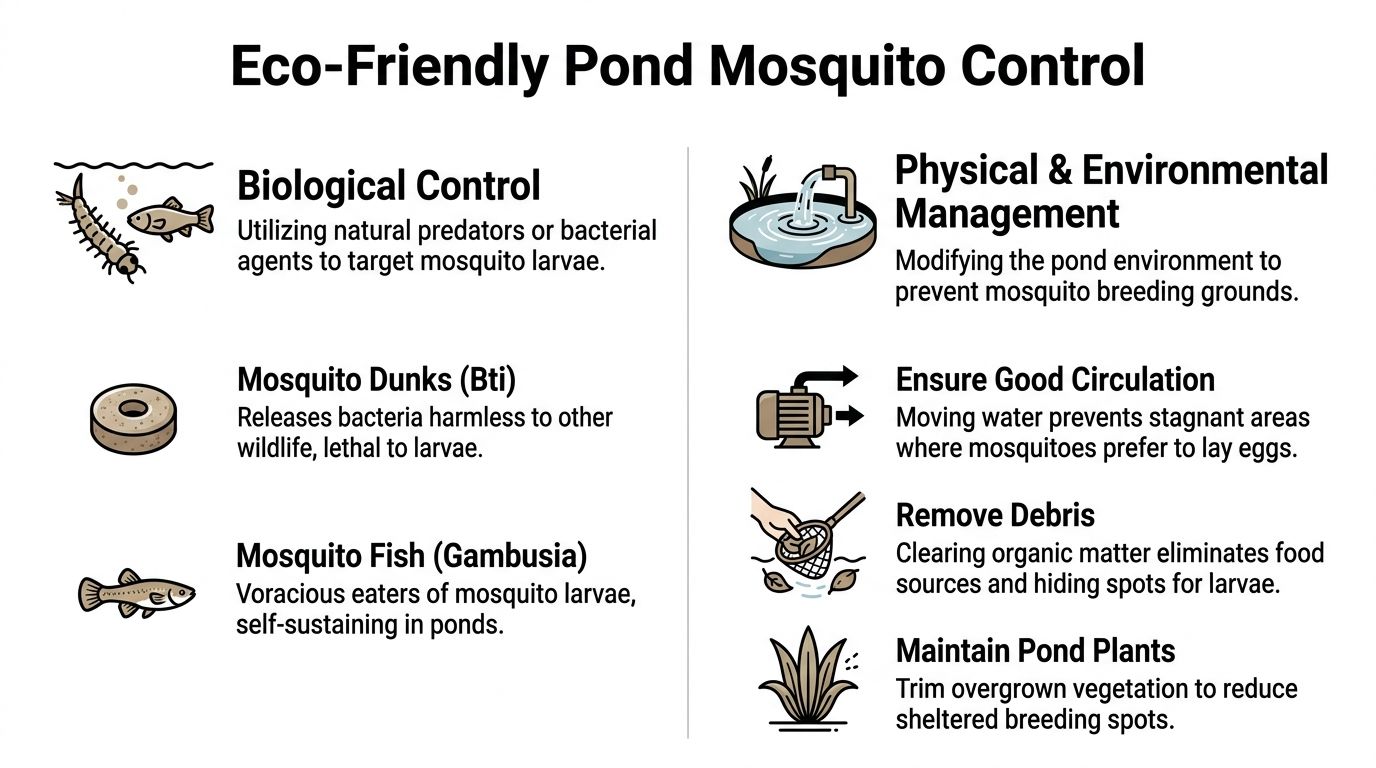
The eco-conscious methods that hold up best usually fall into two categories. Some target larvae in the water. Others make the pond less inviting for mosquitoes to use in the first place. On many Crown Point properties, the best results come from combining both, because one wet shoreline shelf can keep producing mosquitoes even when the middle of the pond looks fine.
Biological controls
Biological control focuses on larvae before they become biting adults. That is usually the most efficient point to act, especially in ponds where the breeding site is known and accessible.
Bti products such as Mosquito Dunks
Bacillus thuringiensis israelensis, or Bti, is a bacterial larvicide used in products such as Mosquito Dunks. It is a targeted option for ponds, water gardens, and similar areas where larvae are active and broad spray treatments are not the right fit.
In practice, Bti works well for homeowners who want a lower-impact treatment and are willing to stay on schedule with applications. It is especially useful in ponds that look better after cleanup but still show larval activity in protected corners, around liner folds, or along quiet edges after rain.
The trade-off is straightforward. Bti treats the larvae that are present. It does not correct the pond conditions that keep inviting the next round.
Mosquitofish
Mosquitofish can be effective in the right pond, but they are not the right answer for every property. They feed on mosquito larvae and can provide ongoing suppression where water quality, oxygen levels, and habitat stay stable enough to support them.
That last part matters more than many homeowners realize.
In Northwest Indiana, I see ponds where fish sound like the natural fix, but the pond has shallow warming edges, heavy summer algae, or flood-driven water swings that make long-term success less predictable. A fish-based plan can work, but only if the pond can support fish health and if local conditions will not wash that plan off course after the next stretch of storms.
Mechanical solutions
Mechanical control changes pond conditions so mosquitoes have fewer calm, protected places to lay eggs and develop. For many properties, this is the part that makes the rest of the plan hold up through the season.
Aerators and fountains
Aerators and fountains increase water movement and reduce the still surface conditions mosquitoes prefer. They also improve oxygen levels, which can help overall pond health.
Placement matters as much as the equipment itself. A fountain in the middle of the pond may look active from the patio and still leave quiet water along the bank. That problem shows up often in local ponds with clay bottoms, irregular shelves, or runoff-cut edges. Seasonal flooding can also reshape those margins and create fresh dead zones that standard fountain coverage never reaches.
Homeowners often assume "moving water" means the pond is handled. In field conditions, partial movement is common, and mosquitoes only need a few protected pockets.
Debris and vegetation management
This method does not get much attention, but it decides whether the other methods perform well. Mosquitoes use cover. Leaf mats, overgrown marginal plants, grass clipping buildup, and protected shoreline clutter give larvae shelter from surface disturbance and make treatment less reliable.
On many NWI properties, local maintenance in these areas is what matters most. Spring rains and summer storm runoff can push fresh organic debris into the same low edges over and over. If those edges are left alone, the pond keeps offering protected breeding areas even after treatment.
Side-by-side comparison
| Method | Best use | Main strength | Main limitation |
|---|---|---|---|
| Bti | Targeted larval control in ponds with repeat activity | Focuses on larvae without broad pond spraying | Requires repeat use and does not correct habitat issues |
| Mosquitofish | Stable ponds that can support fish long term | Ongoing larval predation | Less reliable in ponds with poor oxygen, algae stress, or flood-related disruption |
| Aeration or fountain | Ponds with calm surface water or weak circulation | Reduces still water and improves overall water movement | Often misses shoreline dead spots if sizing or placement is off |
| Debris and plant management | Every pond, especially after storms | Removes protected breeding cover | Needs routine attention through the season |
The strongest pond mosquito programs are usually layered. Use circulation to reduce stagnant areas, cleanup to remove cover, and larval control where pressure remains. That approach is practical, lower impact, and better suited to the pond conditions many homeowners in Northwest Indiana are dealing with.
The Green Advantage Solution for Northwest Indiana Ponds
Generic pond advice tends to assume the water body behaves the same everywhere. It doesn’t. Northwest Indiana ponds have local quirks that change what works.
The biggest one is soil. In many parts of this region, clay-heavy ground creates shallow, stubborn wet areas that don’t drain or circulate well. That’s why some homeowners install aeration and still wonder why they’re getting bitten near the bank.
Why local conditions change the plan
The verified local angle is clear. Generic advice often fails in Northwest Indiana, where clay-heavy soils create shallow, stagnant zones that resist standard aeration. Local data shows aeration alone may only reduce larvae by 45% in these clay environments (regional clay-soil mosquito challenge overview).
That doesn’t mean aeration is a bad idea. It means aeration may need help.
A muddy shelf, an undercut shoreline, or a low swale that fills during rain can keep producing mosquitoes even while the center of the pond looks active and well maintained. Homeowners often judge success by what they can see from the patio. Mosquitoes use the pockets they cannot.
What a site-specific approach looks like
A pond with local clay and flood-driven stagnation usually needs a layered plan instead of a single correction. That often includes:
- Shoreline reshaping where shallow standing water forms after rain
- Targeted circulation placement so dead zones don’t survive around the edges
- Biological controls where the pond’s ecology supports them
- Selective larval treatment when active breeding is confirmed
- Ongoing observation because weather can change the problem quickly
That’s also why DIY efforts can create mixed results. A homeowner may add fish to a pond that doesn’t have the right oxygen balance, or place a fountain where it looks attractive rather than where the water stalls. The equipment runs, but the breeding pockets remain.
Trade-offs matter
Eco-friendly mosquito control isn’t just about using less product. It’s about using the right method in the right place. A balanced pond should protect outdoor enjoyment without creating unnecessary stress for fish, beneficial insects, or the surrounding area.
Some properties do better with stronger emphasis on circulation and habitat correction. Others need more direct larval intervention because the pond shape or runoff pattern keeps reintroducing risk. The right answer depends on the site.
A pond can look active in the middle and still breed mosquitoes at the edge. That’s common in clay-bottom settings.
For homeowners and property managers searching for exterminator in Crown Point, IN, pest control in Crown Point, IN, or support for a larger mosquito issue across the yard, the local advantage is knowing that pond mosquito control isn’t a one-size-fits-all treatment. The most reliable results come from a plan built around Northwest Indiana conditions, not a generic checklist copied from another region.
That same mindset often overlaps with broader outdoor pest work too. Properties struggling with pond mosquitoes may also need seasonal help with wasps, spiders, or perimeter pest pressure, especially where moisture and vegetation create a wider habitat pattern.
What to Expect from Your Crown Point Pest Control Partner
Homeowners usually feel better once they know what the process looks like. Mosquito control around a pond shouldn’t feel vague or improvised. It should feel organized, clear, and tied to what’s happening on the property.

The first conversation
Most service relationships start with a homeowner describing what they’re noticing. Biting activity at dusk. Mosquitoes hovering near the waterline. A pond that seems worse after every rain.
A good pest control partner listens for patterns, not just complaints. Is the problem isolated to the pond? Is it strongest near shaded edges? Has the yard also developed standing water in nearby low spots?
That first step matters because pond complaints are often part of a bigger outdoor pest picture. Some customers start with mosquito control and later ask for help with spider activity around lighting, ant issues near irrigation zones, or seasonal wasp nesting near outdoor living areas.
The on-site inspection
A useful inspection goes beyond a quick glance at the pond surface. It should include the shoreline, nearby drainage, vegetation density, pump performance, and surrounding mosquito habitat.
The most practical inspections usually answer these questions:
| Inspection focus | What it tells you |
|---|---|
| Water movement | Whether mosquitoes have calm areas for laying eggs |
| Shoreline condition | Whether clay, grading, or runoff is creating stagnant pockets |
| Debris and plants | Whether larvae have shelter near the edges |
| Nearby standing water | Whether the pond is the only source or just one part of the problem |
A treatment plan that makes sense
Homeowners shouldn’t have to guess why one method is recommended over another. If circulation is the weak point, that should be explained. If the site needs biological control or larval treatment, the reasoning should be clear.
The best service plans are straightforward. They focus on what’s happening now, what can improve with maintenance, and what should be monitored through the season.
What homeowners want most: clear answers, realistic expectations, and follow-up when conditions change.
Ongoing support instead of one-time guessing
Mosquito pressure shifts with rainfall, heat, and plant growth. That’s why long-term support matters more than a single visit for many pond properties.
For residential pest control and commercial pest control alike, consistency protects more than comfort. It helps protect outdoor usability, property appearance, and peace of mind. A well-managed pond area makes it easier to enjoy patios, decks, docks, and backyards without constant swatting or worry.
For Crown Point homeowners, the right pest control partner should feel like a local resource. Not just someone who treats symptoms once, but someone who understands how Northwest Indiana yards behave through the season.
Reclaim Your Pond and Yard Today
A mosquito-heavy pond doesn’t mean you have to give up on your backyard. It usually means the pond needs a better strategy.
The most dependable way to control mosquitoes in ponds is to combine shoreline maintenance, water movement, and targeted larval control when needed. That approach is more practical than relying on one product and hoping it solves everything.
If your pond sits in clay-heavy soil, floods after storms, or keeps producing mosquitoes even after you’ve tried a fountain or store-bought treatment, the issue may be more site-specific than it looks. That’s common in Crown Point and nearby Northwest Indiana communities.
A professional inspection can identify the dead zones, maintenance gaps, and surrounding water sources that keep the cycle going. Once those are clear, the right fix is usually much more straightforward.
Frequently Asked Questions About Pond Mosquito Control
Can mosquitoes breed in a pond with a fountain
Yes. In many Crown Point yards, the fountain moves the middle of the pond while the problem stays along the edges.
I see this often in clay-bottom ponds. Water sits in shelf areas, plant pockets, and shallow spots left behind after heavy rain. If those sections stay still for several days, mosquitoes can use them even when the pond looks active from the patio.
Are mosquito dunks safe for pond use
Usually, yes, when they are used as directed and matched to the pond setup. They are a good fit for some ponds, but they are not a substitute for correcting stagnant areas.
For homeowners with fish, pets, or visiting wildlife, product choice should be based on the whole pond environment, not a quick store-shelf decision.
Do mosquito fish really work
They can. Success depends on pond conditions, predator pressure, water quality, and whether the pond can support them over time.
In Northwest Indiana, I would not treat mosquito fish as an automatic fix. They make more sense in some ponds than others, and local pond conditions matter.
Why didn’t my aerator solve the problem
Because circulation is rarely the only issue.
If runoff keeps washing organic debris into the pond, or flooding leaves shallow water around the perimeter, mosquitoes can keep breeding outside the main circulation pattern. That is common in this part of Indiana, especially after summer storms.
Should I treat the pond or the whole yard
The pond should be the starting point, but the yard usually needs attention too. Downspout discharge, wheelbarrows, clogged drains, kids' toys, and low spots in the lawn can keep mosquito pressure high even after the pond improves.
A full inspection usually saves time.
Is professional mosquito control worth it for a pond
Yes, if the problem keeps coming back or the pond has site-specific issues that generic advice does not address. Clay soil, stormwater runoff, and flood-prone edges change how a treatment plan needs to be built.
That is where local experience helps. The Green Advantage looks at the pond, shoreline, drainage, and nearby breeding spots together, then recommends the least disruptive fix that will hold up in real Northwest Indiana conditions.
| Pond Mosquito Control FAQ | Answer |
|---|---|
| Can a clean-looking pond still breed mosquitoes? | Yes. Mosquitoes use sheltered edges and shallow still water that homeowners often miss. |
| Is one treatment enough for the whole season? | Usually no. Rain, heat, plant growth, and flooding can change pond conditions fast. |
| What matters most for prevention? | Consistent maintenance, good water movement, and checking nearby standing water after storms. |
If mosquitoes are taking over your pond area in Crown Point or nearby Northwest Indiana, contact The Green Advantage for a professional inspection and a practical, eco-conscious treatment plan. Whether you need help with a backyard pond, broader mosquito reduction, or ongoing residential pest control, their team can help you get your yard back.