
If you're a homeowner in Crown Point, IN, finding spiders in your basement can be an unsettling experience. It often feels like a sign that your home isn't clean, but the truth is, basements provide the perfect environment for these eight-legged intruders to thrive. At The Green Advantage, we want to reassure you that this is a common issue in Northwest Indiana, and more importantly, it's one you can solve. This guide will walk you through why spiders love your basement and how you can reclaim your space, from DIY tips to professional pest control in Crown Point, IN.
Why Spiders Love Your Basement and What You Can Do
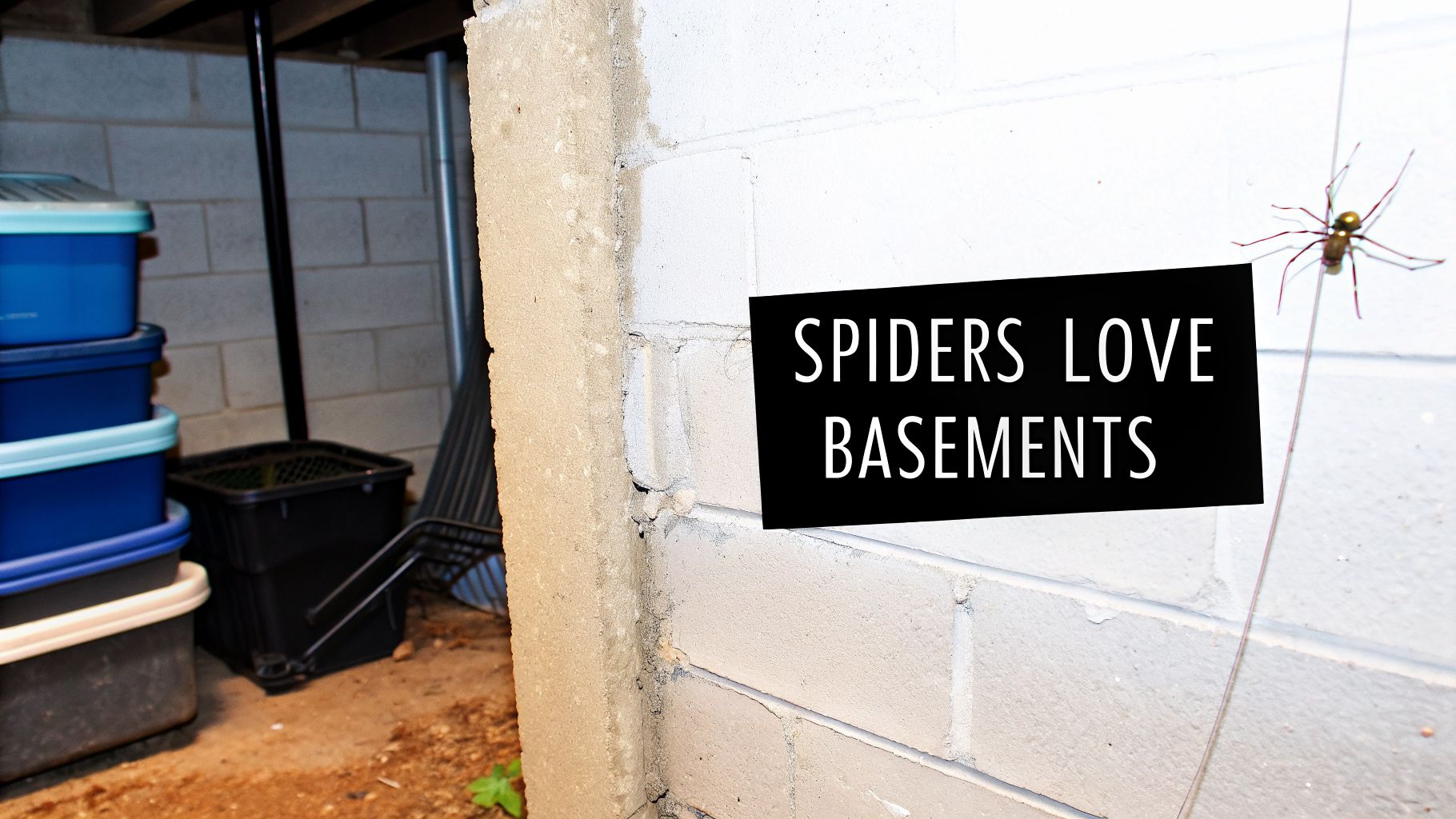
Finding spiders in your Crown Point basement can be unsettling, but it's an incredibly common experience for homeowners here in Northwest Indiana. It's not a reflection of how clean your home is; it just means your basement provides the perfect conditions for these eight-legged intruders to thrive.
The real secret to getting rid of them for good is understanding why they showed up in the first place. Spiders are always on the lookout for three things:
- Shelter: Those quiet, undisturbed corners, exposed rafters, and cluttered piles of boxes are ideal spots for them to build webs, hunt, and lay eggs.
- Moisture: The cool, damp air common in basements is a huge draw for spiders and the little bugs they love to eat.
- Food: If your basement already has other pests like ants, silverfish, or centipedes, you've basically set out a buffet. Spiders will follow the food.
Identifying the Usual Suspects in Crown Point
While you might find a variety of spiders indoors, the most common culprit you'll see is the cellar spider, which many people mistakenly call a "daddy long-legs." With their long, wispy legs, these guys are perfectly adapted to the low-light, sheltered environment your basement offers.
In fact, dozens of cellar spider species across North America have figured out how to live alongside us. They're so good at it that they've spread globally, often by hitching a ride on our stuff. If you want to get to know this frequent basement guest, you can learn more from this detailed guide to cellar spiders.
Seeing cellar spiders or other common house spiders is often a sign. They're telling you that you might have an underlying moisture issue or another insect problem that needs your attention. Tackling those root causes will get you much further than just squishing every spider you find.
Think Proactively, Not Reactively
The best spider control isn’t about chasing down individual spiders after they’re already inside. It’s about methodically making your basement an unwelcoming place for them. When you focus on exclusion and changing the environment, you interrupt their life cycle and make your home a less appealing target from the start.
Quick-Start Spider Prevention Checklist
Here are the most impactful first steps you can take to immediately reduce spider activity in your basement. Tackle these over a weekend, and you'll see a real difference.
| Action Item | Why It Works | Frequency |
|---|---|---|
| Declutter and Organize | Removes spider hiding spots and makes it easier to spot new activity. Switching from cardboard to plastic bins is a game-changer. | Seasonally |
| Run a Dehumidifier | Lowers humidity to below 50%, making the air too dry for spiders and the insects they eat. | Daily during humid months |
| Seal Obvious Gaps | Use caulk to fill small cracks around pipes, windows, and where the foundation meets the house frame. This blocks their main entry points. | Annually or as needed |
| Vacuum Webs and Corners | Physically removes spiders, webs, and egg sacs all at once, which immediately cuts down on the population. | Weekly or bi-weekly |
Focusing on these four key areas directly hits the shelter, moisture, and food sources that spiders depend on, giving you the upper hand right away.
Fortifying Your Foundation to Block Spider Entry Points
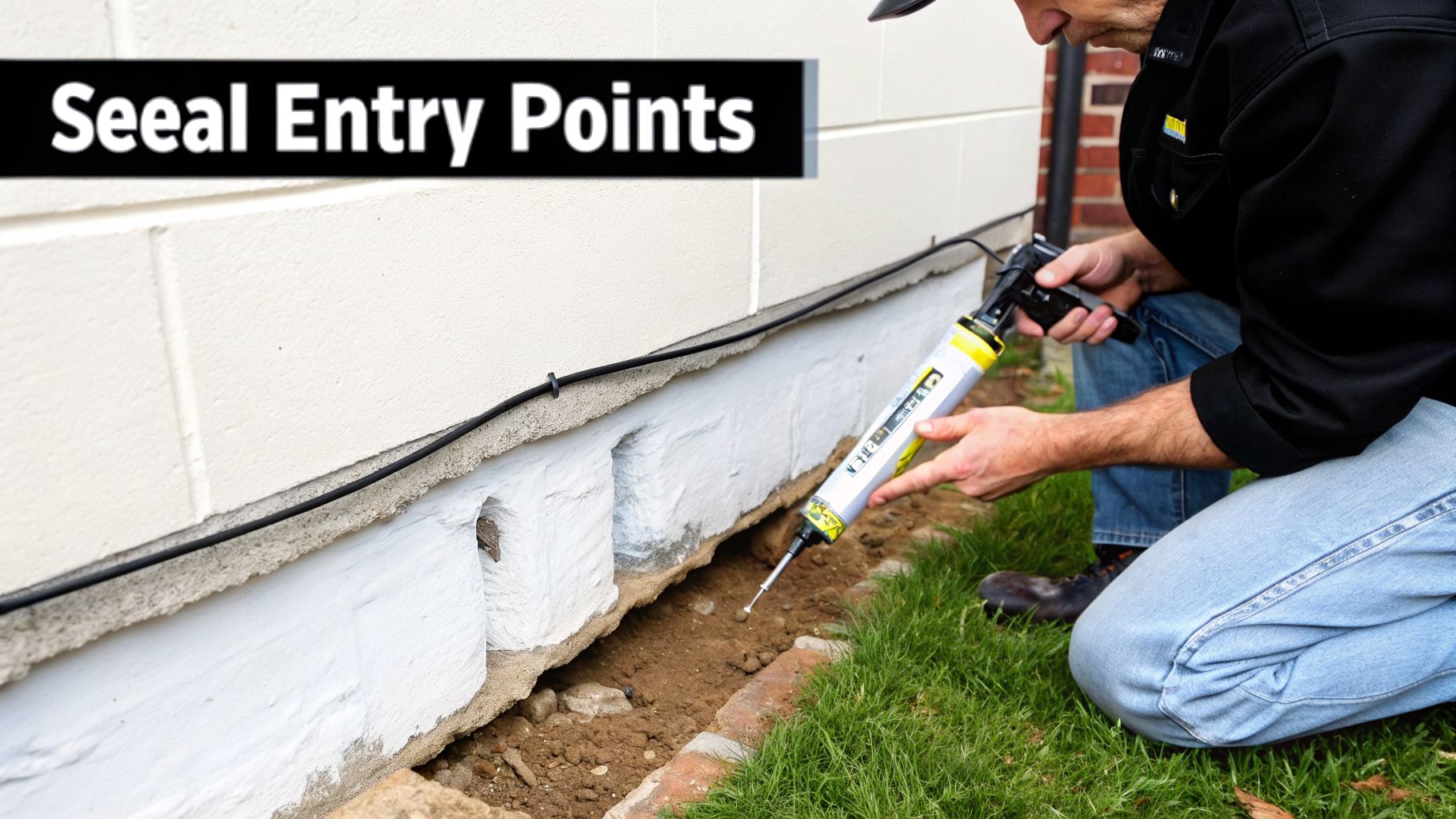
Spiders aren’t Houdinis; they don't just appear out of thin air. They're sneaky opportunists, and the most effective way to keep them out of your basement for good is to build a fortress they can't breach. This means sealing up every last crack and gap, a process we in the pest control industry call "exclusion."
Think of it this way: your foundation is the first line of defense. Here in Crown Point, IN, our freeze-thaw cycles mean houses are constantly settling and shifting. Tiny cracks are bound to appear, and to a spider, those aren't cracks—they're superhighways straight into your home.
Sealing these entry points isn't just a spider solution, either. The same gaps that let spiders in are an open invitation for ants, centipedes, and even mice. That’s why exclusion is the foundation of any solid residential pest control strategy from a trusted exterminator near me.
Pinpointing Common Spider Entry Points
So, where do you even start looking? Spiders can flatten themselves and squeeze through gaps so small you’d barely notice them. Your best bet is to grab a powerful flashlight and do a slow, methodical inspection of your basement's perimeter, both inside and out.
Here are the hot spots we at The Green Advantage always check first:
- Foundation Cracks: Scan the concrete or block walls for any hairline fractures. A crack that looks like nothing to you is a front door for a spider.
- Sill Plate Gaps: This is a big one. The sill plate is the wood plank sitting right on top of your foundation. Gaps almost always form between the wood and concrete, creating a highway for pests.
- Utility Line Openings: Look closely where pipes, wires, and vents come through the wall. The space around plumbing, electrical conduits, and dryer vents is often hastily sealed, if at all.
- Basement Windows and Doors: Check for brittle or missing weather stripping, torn screens, and gaps around window frames. These are basically wide-open doors.
A thorough inspection is half the battle. If you want to think like a pro, using a detailed pest control inspection checklist helps ensure you don't miss a single spot.
Choosing the Right Sealing Materials
Once you've mapped out all the weak points, it's time to seal them up. And trust us, using the right product for the job makes all the difference. A cheap, quick fix will likely fail, and you’ll be right back where you started.
For Small Cracks and Gaps (less than 1/4-inch):
A high-quality silicone or acrylic caulk is your best friend here. It’s flexible enough to handle slight shifting and perfect for those hairline foundation cracks, gaps around windows, and the crucial space between the sill plate and foundation. Just apply a nice, steady bead to fill the opening completely.
For Larger Voids and Openings (greater than 1/4-inch):
For bigger gaps, especially around pipes, expanding foam sealant is the way to go. It expands to create a perfectly tight, pest-proof seal. Pro tip: if you're worried about mice chewing through the foam (and they will), stuff the hole with coarse steel wool first, then seal over it with the foam.
A Note on Moisture Control
It's important to remember that many of these gaps also let in moisture, which is a magnet for spiders and the insects they hunt. A critical part of the process is learning how to waterproof basement walls. A dry basement is an unappealing basement to pests.
Finally, don't overlook the easy wins. Replace those torn window screens and install fresh weather stripping or door sweeps on any basement doors. These small details have a huge impact. By taking the time to truly seal your foundation, you're not just getting rid of spiders—you're making a lasting investment in your Crown Point home's health and integrity.
Make Your Basement a No-Go Zone for Spiders
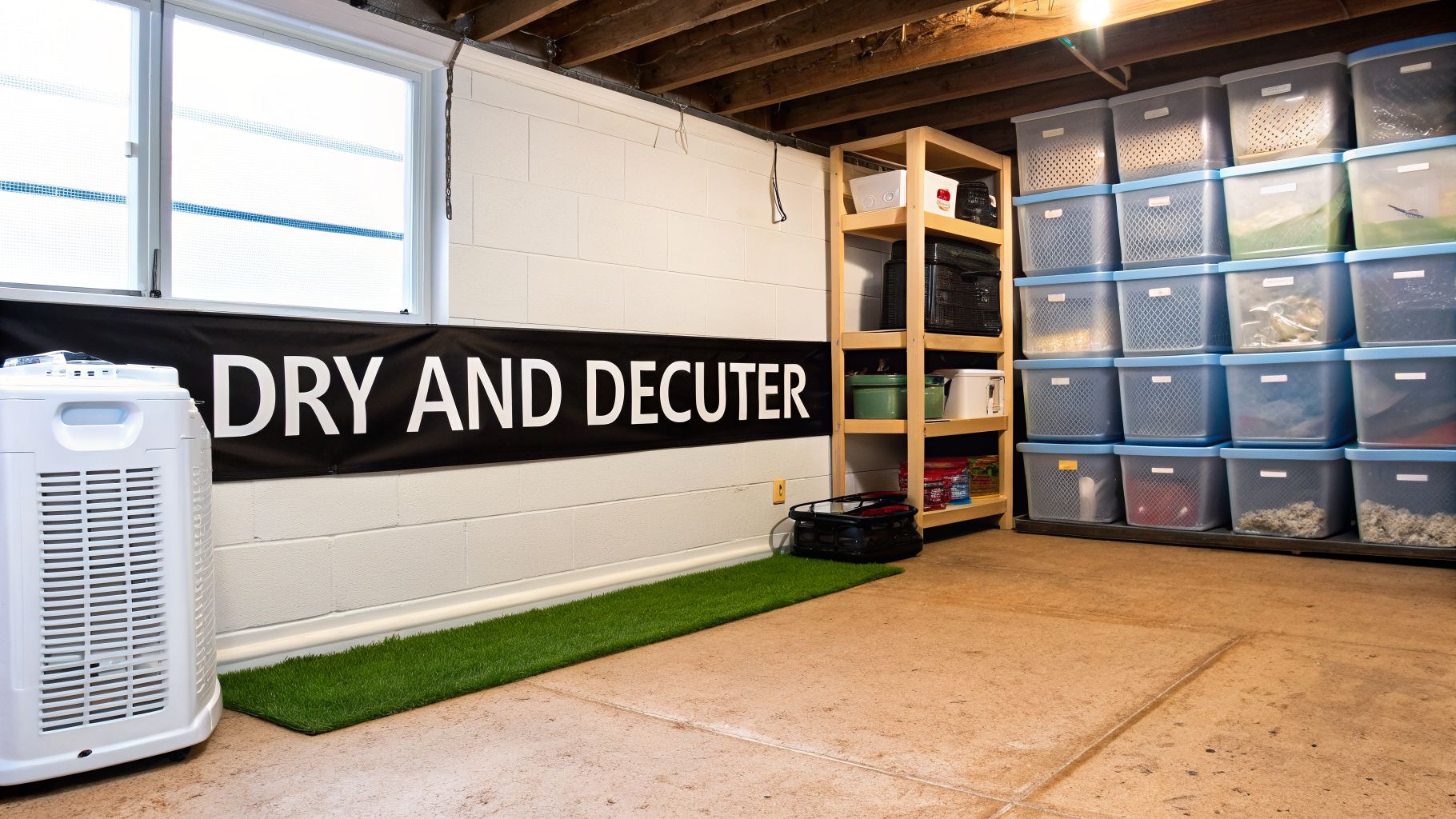
Once you've sealed up all the cracks and gaps, the real work begins. Now, we need to change the environment of your basement so spiders simply don't want to be there. Think of it from their perspective: they're looking for shelter, a bit of moisture, and—most importantly—a reliable food source. If you take away those three things, you’ll turn your basement from a five-star spider resort into a place they’d rather avoid.
We call this "habitat modification" in the pest control world. It’s a fancy term for a simple idea: change the conditions that let pests move in and get comfortable. Here in Northwest Indiana, this is especially crucial during our humid summers and damp springs, when basements naturally become prime real estate for spiders and their prey.
Get a Handle on Humidity
If you do only one thing, make it this: control the moisture in your basement. Spiders, and the little critters they love to eat like silverfish and millipedes, absolutely thrive in damp, clammy air. That musty smell you might notice downstairs? That’s basically a giant "Vacancy" sign for pests.
Your target is to keep the relative humidity below 50%. This makes the air just a little too dry for them to be comfortable. The easiest way to do this is by running a good dehumidifier, especially from late spring through early fall. As a bonus, it also helps stop mold and mildew in their tracks.
Take Away Their Hiding Spots
Spiders are naturally shy. They aren't looking for a fight; they're looking for a dark, quiet, cluttered corner to set up shop, spin a web, and be left alone. An open, organized basement is their worst nightmare.
Look around your basement right now. Are there piles of old magazines, forgotten firewood, or stacks of cardboard boxes? That's what we call a "spider condo." Cardboard is a particularly big offender because it wicks moisture right out of the concrete floor and offers endless dark crevices for spiders to hide.
Here’s how you can reclaim that space:
- Ditch the Cardboard: Make the switch to airtight plastic totes. They don't absorb moisture and seal up tight, keeping pests out for good.
- Get It Off the Ground: Use sturdy shelving—metal or plastic is best—to lift all your storage bins off the floor. This simple move eliminates countless hiding spots underneath boxes and helps with airflow.
- Leave Some Breathing Room: Don't push your shelves right up against the basement walls. Leaving a gap of a few inches lets air circulate and makes it infinitely easier for you to do a quick scan for webs or other pest activity.
A Pro's Perspective
Just getting your basement organized is a huge part of the battle. When every corner and baseboard is visible, you're not just removing spider hideouts—you're making it easy to spot a new web or the start of a problem long before it becomes an infestation.
Cut Off the Buffet
Here’s the thing: spiders rarely end up in your basement by accident. They follow the food. If you’ve got a healthy population of other household pests crawling around, you’re basically ringing the dinner bell for every spider in the neighborhood. That's why a true spider control strategy has to include managing the other insects.
This is where a comprehensive pest control plan, like what we offer at The Green Advantage, makes a real difference. We don't just treat for spiders; we figure out what's attracting them in the first place—be it ants, crickets, silverfish, or something else—and address the root cause. When you take away their food, spiders will quickly move on to better hunting grounds. Our ant control and general pest treatments are essential parts of an effective spider solution.
Think of spiders as a big, flashing sign that you have other pest issues. In fact, a 2016 study of 50 homes found cobweb spiders in 65% of all rooms surveyed. Basements are especially popular because the dark, damp environment is exactly what they seek out. If you're curious, you can read more about the study's spider findings to see just how common they are. It really drives home why tackling the entire pest ecosystem is the only way to get lasting results.
Practical DIY Methods for Managing Spider Activity
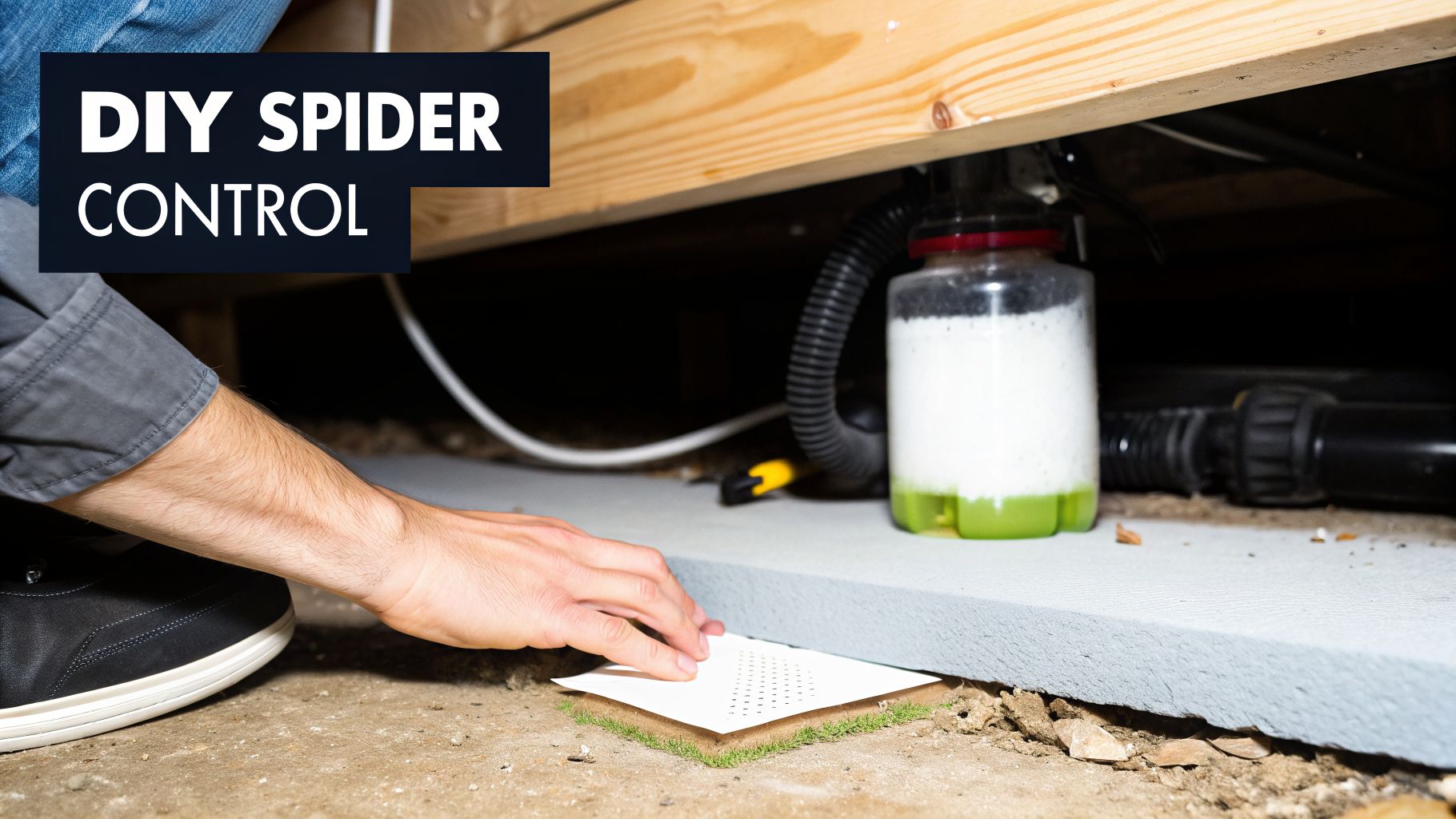
Alright, you've sealed the cracks and are working on the moisture—now for the hands-on part. For homeowners in Crown Point who want to take an active role, a few tried-and-true DIY methods can make a real difference in managing any spiders that still sneak past your defenses.
Let's skip the myths and get right to what we've seen work. These techniques are all about monitoring what's going on, directly reducing the spider population, and making your basement an unwelcome space for them. They're the perfect support system for a professional pest control plan from The Green Advantage.
Strategic Monitoring With Sticky Traps
Never underestimate the humble sticky trap. It’s one of the most effective tools in your DIY kit. They aren't a fix for a major infestation on their own, but they are incredibly valuable for monitoring and capturing wanderers.
By placing traps, you create a roadmap of spider activity. Checking them every week or so tells you exactly where the hot spots are, giving you critical clues about where they might be getting in or hiding out.
For the best data, place traps:
- Along baseboards, tucked into those dark corners where walls meet.
- Behind big furniture or boxes that you don't move often.
- Near potential entry points like basement window wells or where pipes come through the wall.
Think of them as an early-warning system. If you suddenly see more spiders in the traps, it’s a signal to re-inspect your seals or look for a new problem.
The Power of Your Vacuum Cleaner
Your vacuum cleaner is your number one weapon for immediate spider removal. With a long extension wand, it’s perfect for not just getting rid of adult spiders but, more importantly, their egg sacs.
A single egg sac can hatch hundreds of new spiders. Sucking it up prevents a population explosion right at the source. Make it a routine to vacuum the usual spider hangouts: the upper corners of the ceiling, around exposed floor joists, and in and around your shelving. A quick pass every week or two will seriously disrupt their life cycle.
Expert Tip: After you’re done vacuuming up spiders and their webs, take the vacuum outside immediately. Either throw away the bag in your outdoor bin or empty the canister into a sealed bag and then toss it. This prevents any survivors or viable eggs from making their way back into your home.
Natural Deterrents Used Correctly
Many people ask us about natural repellents. While some of the popular DIY sprays are more myth than reality, a couple of options can be helpful when used as part of a bigger strategy.
Diatomaceous Earth (DE): This is a fine, chalky powder that feels soft to us but is razor-sharp to insects. It works by scratching their exoskeleton and causing them to dehydrate. For DE to work, a spider has to crawl through it. Apply a very fine dusting of food-grade DE in dry, out-of-the-way places:
- Along the sill plate (the wood beam on top of your foundation).
- Inside wall voids around outlets (turn the power off first!).
- Deep in crawl spaces where you won't disturb it.
Peppermint Oil: Spiders seem to navigate by scent and touch, and they really don't like strong smells like peppermint. You can mix several drops of peppermint oil with water and spritz it in corners, around window frames, and in doorways. The trick is reapplication. The scent doesn't last, so you'll need to spray every few days for it to have any effect.
These methods are good backup, but nothing beats making your home a place spiders want to avoid. Even simple exterior maintenance, like knowing how to clean siding to remove webs and the insects they eat, reinforces your defenses.
Putting in this DIY effort gives you a major head start. But if you’re still seeing too many spiders after all this work, it’s usually a sign of a bigger, underlying issue. At that point, calling an exterminator in Crown Point, IN is the smartest and most effective next move.
When Professional Spider Control Is the Right Choice
So, you’ve done everything by the book. You sealed every crack you could find, decluttered the entire basement, and even have a dehumidifier humming away. But you’re still seeing spiders. Webs reappear almost as fast as you can knock them down, and you catch that familiar eight-legged scramble when you flick on the lights.
It’s a frustrating spot to be in, and a common one for homeowners here in Crown Point. While your DIY efforts are absolutely crucial for long-term control, a persistent spider problem is a tell-tale sign of a deeper issue—one that usually needs a professional eye to sort out for good. Professional services from The Green Advantage protect your property, health, and peace of mind.
Why Professional Pest Control is the Solution
Knowing when to pass the torch to a professional can save you a ton of time, frustration, and even money in the long run. If any of these sound familiar, it’s probably time to consider calling an exterminator in Crown Point, IN:
- You see spiders constantly. If you feel like you're stuck in a loop of cleaning webs and setting traps, it means the source of the infestation hasn't been touched. Spiders are either still finding easy ways in or are hatching inside faster than you can keep up.
- The problem is getting worse, not better. A sudden boom in the spider population almost always points to a thriving food source. An increase in spiders means you likely have an underlying issue with ants, silverfish, or other insects that requires a broader residential pest control strategy.
- You find potentially dangerous spiders. It’s not common, but medically significant species like black widows or brown recluses do turn up in Northwest Indiana. Correctly identifying and safely handling these spiders is a job for trained and properly equipped professionals. Full stop.
- You just want lasting peace of mind. Let's be honest, DIY pest control requires constant work. A professional service is designed to give you a solid, long-term solution that protects your home so you don't have to be the one on constant patrol.
Professional pest management isn't just about spraying for spiders; it's about diagnosing the 'why.' A trained technician from The Green Advantage looks beyond the web to identify and resolve the root causes, delivering a solution that lasts far longer than any store-bought spray.
What to Expect From The Green Advantage
When you partner with The Green Advantage, you’re not just getting a quick spray-and-pray treatment. You're getting a comprehensive strategy tailored to the specific pest pressures we see right here in Crown Point. We know how to keep spiders out of your basement because our approach goes far deeper than what a homeowner can do alone.
- A Comprehensive Inspection: It all starts with a thorough look at your property, inside and out. We don’t just head straight for the basement. We’re on the lookout for the tiny details, examining everything from the foundation and siding to the soffits and surrounding landscaping. We want to find every single potential entry point and pest-friendly condition.
- Identifying the Root Cause: Is there a hidden moisture issue in a crawl space that’s attracting silverfish (a spider delicacy)? Or maybe a line of ants marching along the foundation is providing a mobile buffet? We connect these dots to map out the entire pest ecosystem around your home. This diagnostic work is the key to truly effective spider control.
- Targeted, Eco-Friendly Treatments: Once we know what we’re dealing with, we use targeted, eco-friendly pest control methods applied where they’ll have the biggest impact—at entry points, inside wall voids, and in other key harborage areas. Our goal is to be tough on pests while being mindful of your family and pets. You can dive deeper into this topic in our detailed guide on how to get rid of spiders with professional help.
- A Proactive, Long-Term Plan: Finally, we’ll leave you with a clear, actionable plan for the future. This isn’t just our treatment schedule; it includes personalized recommendations for your specific property. When you work with The Green Advantage, you get more than just an exterminator—you get a dedicated partner committed to protecting your Crown Point home.
Working with The Green Advantage in Crown Point, IN
Choosing a pest control company in a place like Crown Point isn't just about getting rid of bugs; it’s about who you trust in your home. We get that. As a local, community-focused team, we’re your neighbors, and we’re committed to earning that trust from the first time you call.
When you reach out to our office in Crown Point, IN, you won't get a confusing phone tree or a distant call center. You'll talk to someone right here in Northwest Indiana who actually understands the specific pest challenges we face in our area. We’ll listen to what's going on, answer your questions, and make the whole process feel simple and direct.
What Our Service Looks Like in Action
We believe you should know exactly what's happening every step of the way. No surprises, no confusing jargon—just a clear, effective plan to get your home back to being yours.
Here's what you can expect when working with The Green Advantage:
- A Hands-On Property Assessment: First things first, one of our licensed technicians will come out for a thorough inspection. We don't just spot-treat for spiders. We put on our detective hats to figure out why they’re there in the first place. That means checking for tiny foundation gaps, moisture problems in the basement, and even other insects that are providing a steady food source.
- A Straightforward Breakdown: Once we have the full picture, we’ll walk you through everything we found. We’ll point out the specific entry points and problem areas, explain how they’re contributing to the spider issue, and answer any questions you have. We want you to see what we see.
- Your Custom and Eco-Friendly Plan: Based on our findings, we create a targeted treatment plan for your home. This is never a one-size-fits-all approach. We use eco-friendly pest control methods that are tough on pests but designed to be safe for your family and pets. The goal is to solve the problem at its source for lasting relief.
As a trusted company with deep roots in the Crown Point community, our reputation is everything. We build it one home at a time by delivering real, lasting results for our neighbors.
Your peace of mind is what matters most. We’ll keep you in the loop throughout the entire process and follow up to make sure the treatment worked. We'll also give you practical tips for keeping spiders out for good. It's this partnership approach that has made our residential and commercial pest control services the trusted choice here in Northwest Indiana.
Your Basement Spider Questions Answered
We get a lot of questions from homeowners in Crown Point about spiders in their basements. Here are answers to some of the most common ones we hear.
Are Spiders In My Indiana Basement Dangerous?
The good news is that most of the spiders you'll find in your Northwest Indiana basement are completely harmless. The usual suspects, like cellar spiders (daddy longlegs) and common house spiders, are just looking for a meal of other bugs and want nothing to do with you.
That said, we do have a couple of spiders in our region with medically significant bites: the black widow and the brown recluse. While finding them is uncommon, they prefer dark, quiet, and cluttered spaces—making basements a potential spot. An experienced exterminator in Crown Point, IN can tell you exactly what you're dealing with and make sure any concerning species are handled correctly.
How Often Should My Basement Be Treated For Spiders?
When it comes to keeping spiders out for good, spider control isn't a one-time fix. Pests are constantly trying to get in from the outside, so a consistent approach is key.
For most homes in the Crown Point area, we find that quarterly treatments are the sweet spot. This schedule allows us to maintain a solid protective barrier around your foundation and, just as importantly, adapt to the seasons. We can knock down the insect populations that boom in spring and summer, which removes the spiders' food source and makes your home far less inviting to them. This preventative approach is also key for our termite control and mosquito control services.
Seeing a few more spiders right after we've treated is actually a good thing! It means they're being forced out of their hiding places as the treatment works and their food supply disappears.
Why Do I Still See Spiders After A Pest Control Treatment?
It’s completely normal to spot a few spiders wandering around after a service. In fact, it's a sign that our work is disrupting their routine. As our products take effect, spiders are flushed out of the cracks and crevices where they've been hiding.
Think of it this way: our primary goal with residential pest control is to get rid of the spiders' food—all the other insects crawling around. Once the buffet is closed, the spiders will either leave or die off. If you're still seeing a lot of activity weeks after our visit, don't worry. That's what our guarantee is for. Just give The Green Advantage a call, and we'll be right back out to take another look.
Ready to stop wondering what’s sharing your basement with you? The team at The Green Advantage provides expert pest control near me for lasting peace of mind. We are the trusted choice for homeowners and businesses in Crown Point, IN, and throughout Northwest Indiana. Schedule your professional pest inspection today!